Kindly watch the accompanying YouTube video using this link:
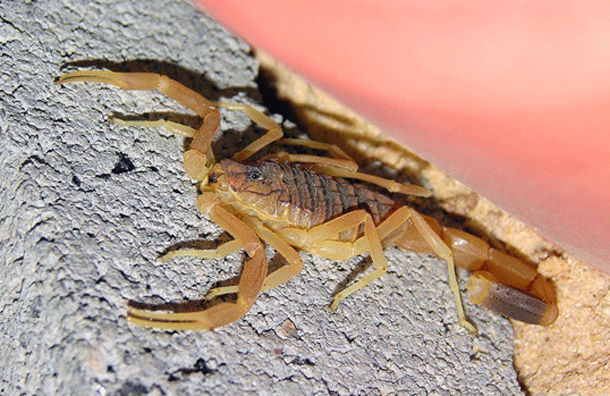
Deathstalker
 furryscale
 This highly venomous scorpion residing primarily in North Africa and the Middle East is responsible for over 75% of scorpion related deaths every year. Although healthy adults usually only feel unbearable pain, children stung by this dangerous creature suffer fever, coma, convulsions, and paralysis before their lungs fill up and they drown in their own fluids.
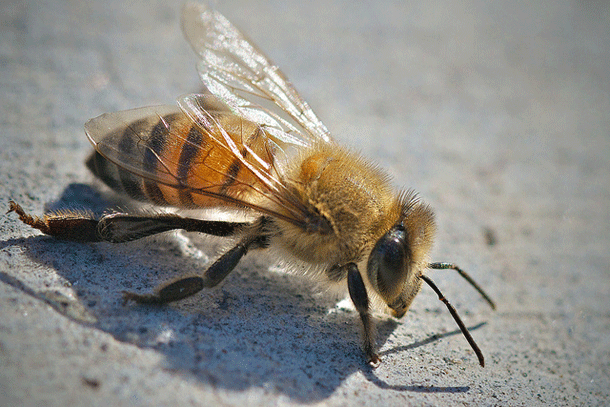
Africanized Honey Bee
 Daniel Plumer
 An experiment gone wrong, in 1957 a Brazilian bee keeper who was trying to interbreed European and African honey bees accidently let some of his “pets” get away. Much more aggressive than their European counterparts, these genetically mixed “killer bees” have since then spread through out the Americas. They have come to be feared in some regions because of their tendency to swarm relentlessly and aggressively chase their victims for miles.
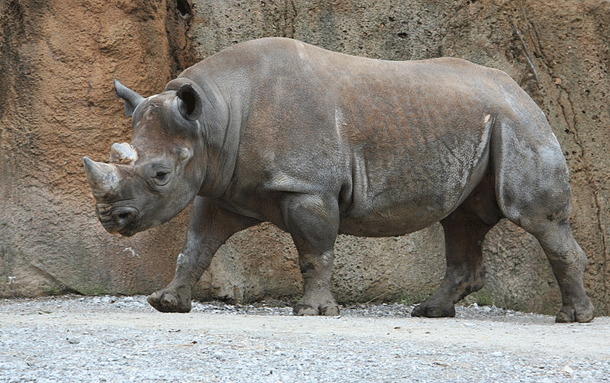
Rhinoceros
 jonathunder
 Rhino related deaths are not an uncommon occurrence in many parts of the world. Having terrible eyesight, they are easy to startle and once they have you in their sights it can be hard to make an escape (unless you can run faster than 40 mph). See the horn? Enough said.
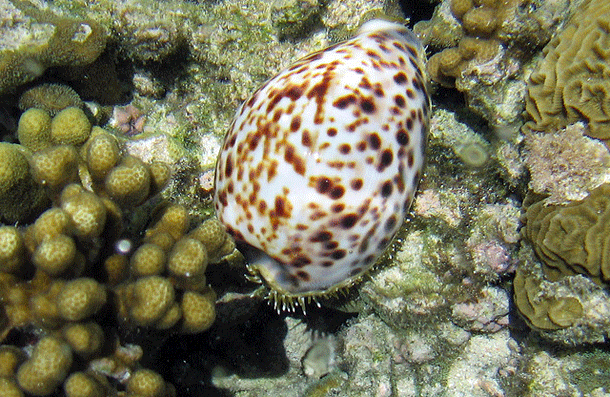
Cone Snail
 gregthebusker
 One drop of venom from this little bugger is enough to end 20 human lives. Sometimes colloquially known as the “cigarette snail,” it has been said that when you are stung by this creature, you’ll have just about enough time to smoke a cigaret before you stop breathing. It’s not like it matters anyway though…there is no antivenom.
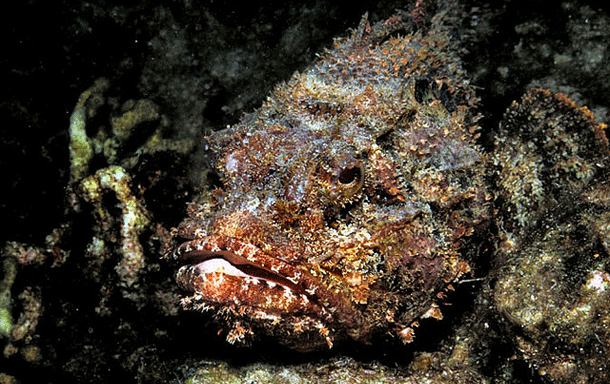
Stonefish
 lazlo
lazlo Lying camouflaged on the ocean floor, this ugly little mass of destruction calmly waits for other fish to swim by before opening its jaws with lightning speed and consuming its prey…all in less than .015 seconds. Also known as the “worlds most venomous fish”, stepping on its spines will at best cost you your leg and at worst, your life.
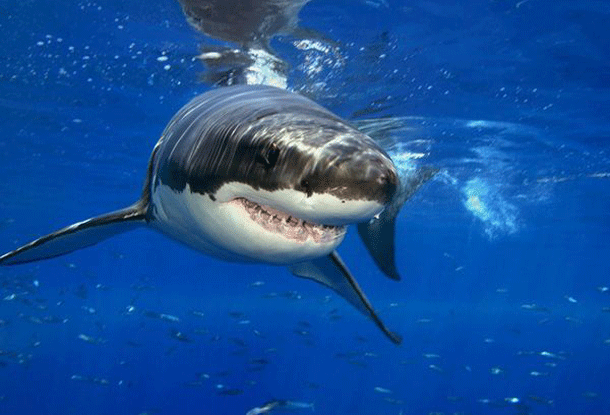
Great White Shark
 David Fleetham
 These legendary predators have a terrible time distinguishing between the edible and the non-edible. There chosen method? Sampling. They sample buoys, boats, surfboards, humans, anything that floats. Contrary to popular belief, however, they really aren’t man-eaters. Humans are too bony, and after the initial bite, they usually leave you to bleed out in the water.
Black Mamba
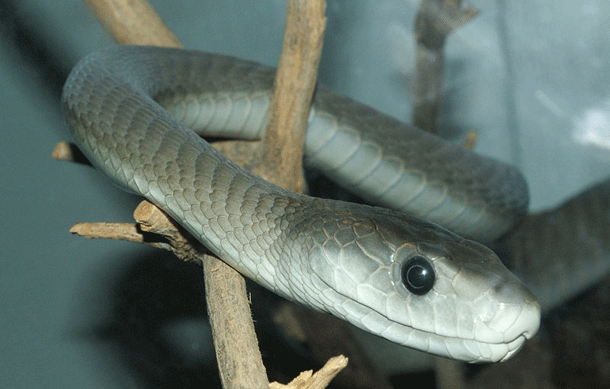 Tim Vickers
 One of the most feared creatures in the world, some experts have even called it “death incarnate.” In Africa it is the source of numerous myths and legends and it is widely known for being highly aggressive, very fast, and attacking without provocation.
Cape Buffalo
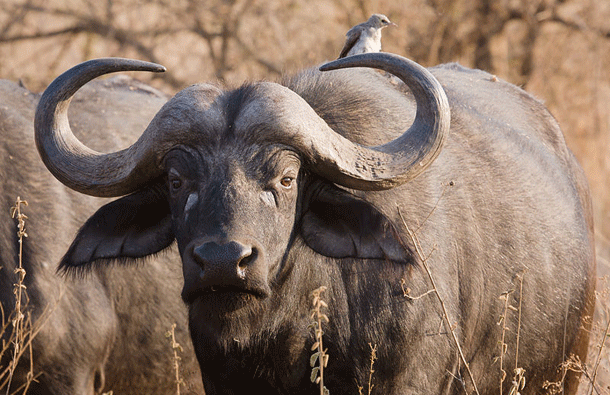 Ikiwaner
 Having never been successfully domesticated, this highly unpredictable, dangerous creature does not play nice with humans. Throughout Africa it is known as the “widowmaker” or “black death” and is responsible for more fatalities every year than any other large animal on the continent.
Poison Dart Fog
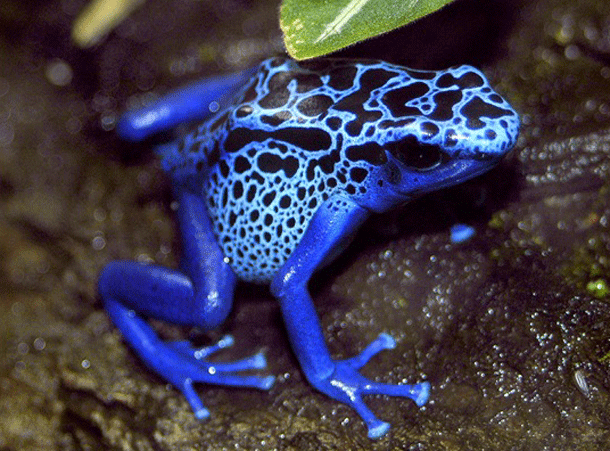 ucumari
 Packed into 2 inches of colorful amphibian is enough poison to kill an army of 20,000 mice. This means that with roughly 2 micrograms, or the amount that would fit on a pinhead, you could successfully stop the heart of a large animal. And to make matters worse, the poison is actually located on the surface of the skin. You seriously can’t touch this.
Polar Bear
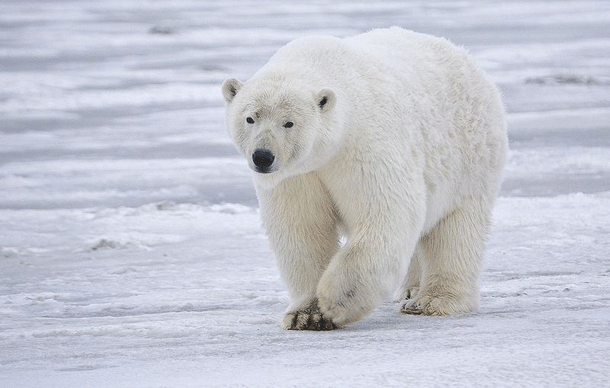 Alan Wilson
 Unlike most other animals on this list, the world’s largest carnivore is not afraid of you. It has no natural predators and will eat anything that is even slightly meaty, including other polar bears. Although they generally don’t kill humans, it’s probably because there aren’t many of them around to kill.
Box Jellyfish
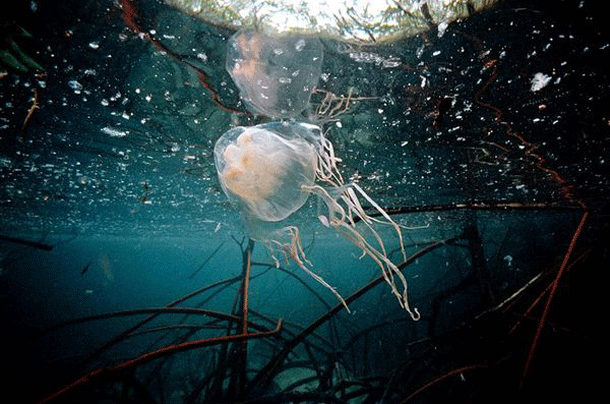 David Doubilet
 Killing more people every year than sharks, crocodiles, and stonefish combined, this box of death has been labeled “world’s most venomous animal.” Its venom is so potent in fact, that in some cases treatment consists of little more than last minute CPR.
African Lion
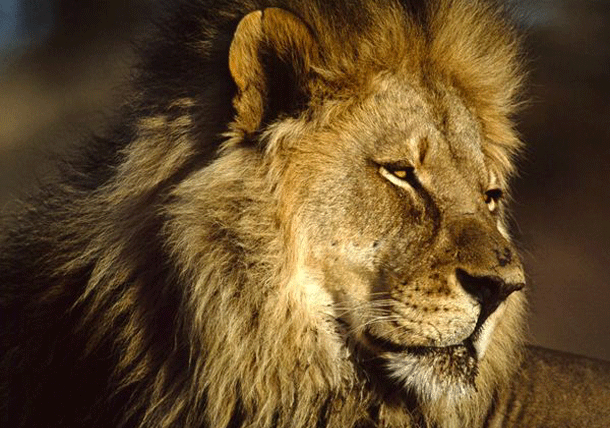 National Geographic
 While humans are generally not on their hit-list, some lions have been known to actively seek out human prey. One famous case was that of the Tsavo man-eaters in 1898 who mauled and killed 28 railway workers in Kenya over a 9 month period.
Boomslang
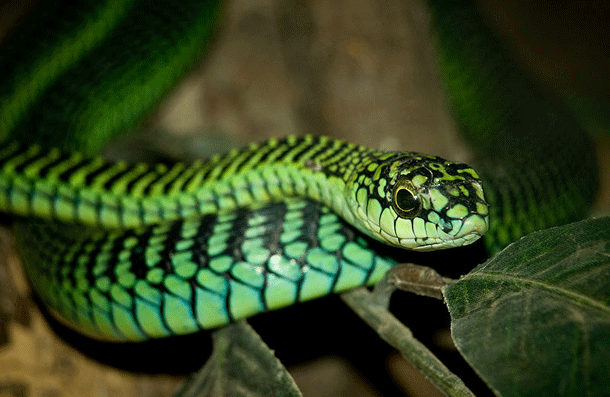 William Warby
 Although they are relatively shy and don’t generally attack humans, when they do, things can get messy. Boomslang venom is a hemotoxin that disables blood clotting. In others words, its victims slowly die as they bleed out from every pore in their body.
Puffer Fish
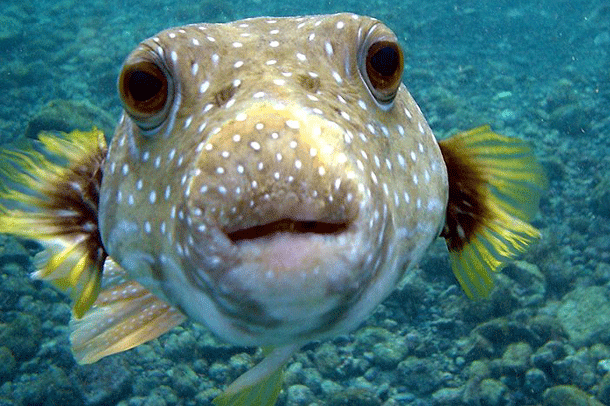 Mila Zinkova
 Considered one of the most poisonous vertebrates in the world, if you have read our article about the 25 strangest foods in the world, you know that it is a delicacy in Japan. Puffer poison will, however, paralyze your diaphragm and stop your breathing if you fail to prepare it correctly.
Hyena
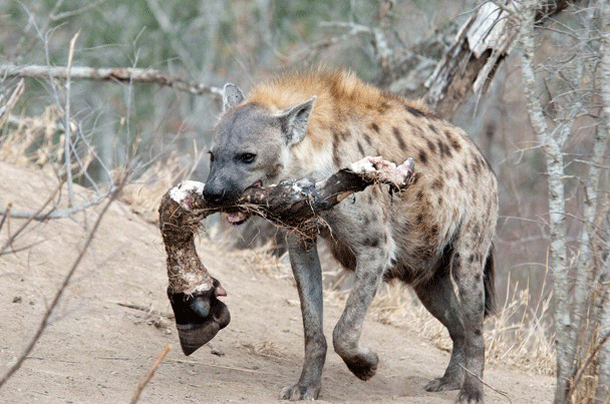 National Geographic
 While these predators may be wary of human interaction during the day, after sunset the paradigm shifts. Although hyenas have been known to hunt humans throughout history, the behavior tends to increase during wartime and disease outbreaks due to their strong affinity for human corpses.
Komodo Dragon
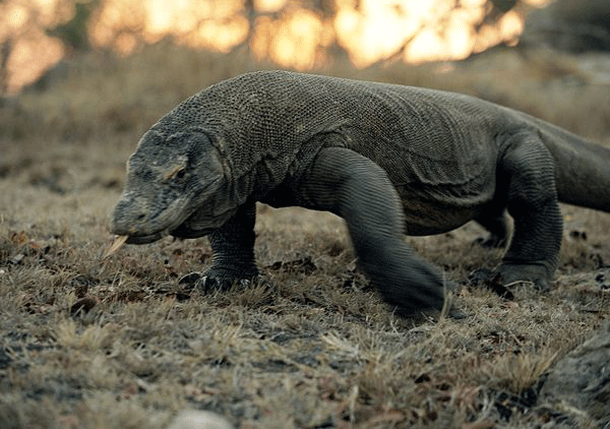 Kenneth Garrett
 Very much like Polar Bears, Komodo Dragons are not picky eaters. They will eat anything from birds to water buffalos to humans and they have even been known to dig up bodies from shallow graves. They are prodigious hunters and will wait stealthily until their prey approaches after which they will charge forward, rip out its throat, and retreat while it bleeds out. Once again, like Polar Bears, the only reason their human kill count is so low is probably due to limited interaction as well as the fact that they only really need to eat once a month.
Tse Tse Fly
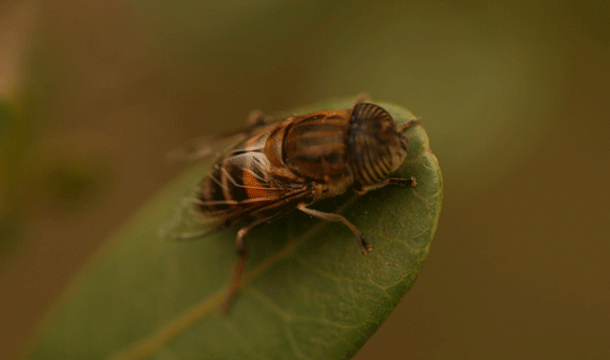 Rhett Butler
 This large blood sucking fly is the primary carrier of African Sleeping Sickness and is therefore indirectly responsible for killing up to a quarter of a million people every year.
Leopard
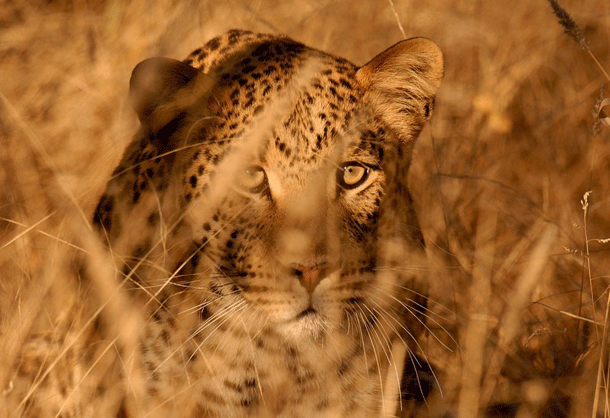 Tom Weilenman
 When most animals are wounded they run away and hide. Not leopards. When these dangerous creatures are wounded they become even more dangerous. Not only that, but they’re strong. Anyone who has watched the Discovery Channel knows that they like to hide their prey out of reach. Translation: they drag dead antelopes up trees.
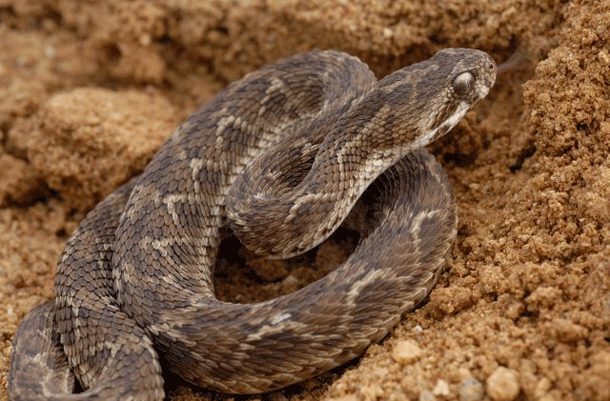
Carpet Viper
 Tim Vickers
 Responsible for the majority of snake related deaths in the world, this viper uses a hemotoxin similar to that of the boomslang. Unfortunately most of the bites occur in areas that lack modern medical facilities so the victims slowly bleed to death over the course of several weeks.
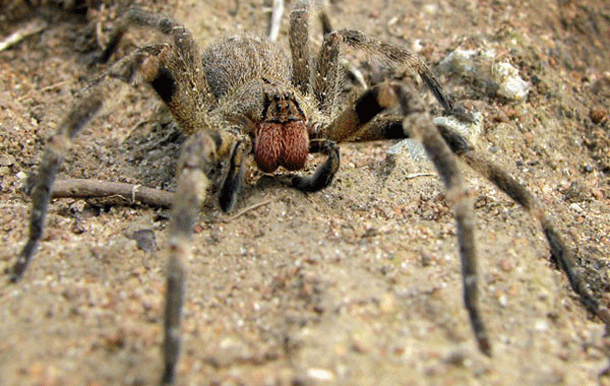
Brazilian Wandering Spider
 techuser
 Meet the most venomous spider in the world, according to the Guinness Book of World Records. What makes this critter so dangerous though is also how it got its name – a tendency to wander. They are often found hiding in houses and cars of densely populated areas, especially during daytime. Not a good combination.
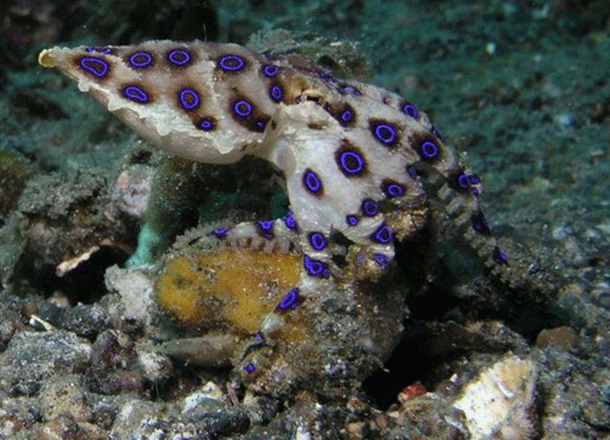
Blue Ringed Octopus
 Tom Weilenman
 About the size of a golf ball, don’t let its small stature fool you, this dangerous animal holds enough venom to kill 26 full grown adults and as you may have guessed, there is no antidote. Assuming that your friend ever gets bitten you had better know CPR because you can be sure that within minutes they will be completely paralyzed and unable to breathe. Mother nature, however, shows no mercy and they will maintain their consciousness for the next few hours until the venom is neutralized by their body. This is of course assuming that you, or someone at the hospital, continues artificial respiration.
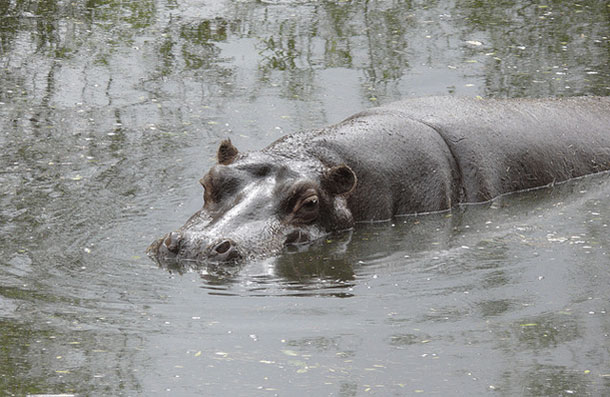
Hippopotamus
 art.com
 Although they are mostly herbivorous, they are also highly aggressive and are widely regarded as one of the most dangerous animals in Africa. They have been known to attack humans without provocation even to the point of destroying entire vehicles.
Saltwater Crocodile
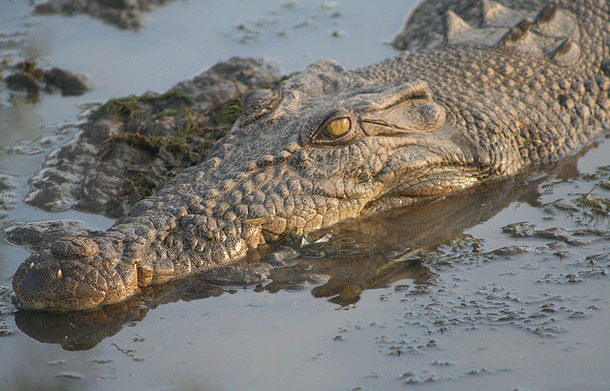 National Geographic
 Sitting at the top of its food chain the Saltwater Crocodile has been known to eat everything from water buffalo to sharks. In order to kill its food it make use of a technique called the “death roll” where it relentlessly flips its prey over and over in the water until it drowns and then comes apart.
African Elephant
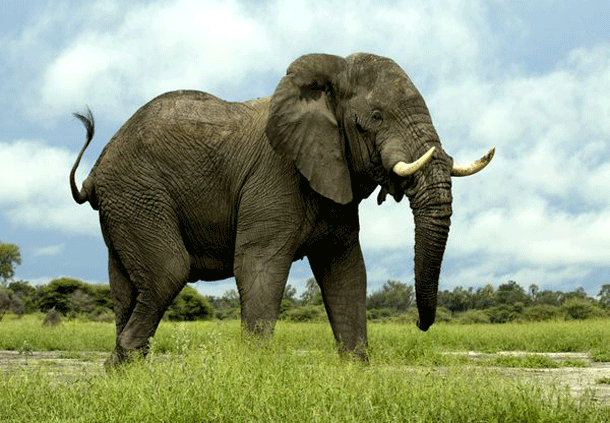 Beverly Joubert
 The world’s largest land animal, elephants can be fiercely aggressive and have been known to trample even a rhinoceros or two to death. They seemingly have the capacity to display bouts of rage and have even engaged in activities that have been interpreted as vindictive, razing entire villages in the process.
Mosquito
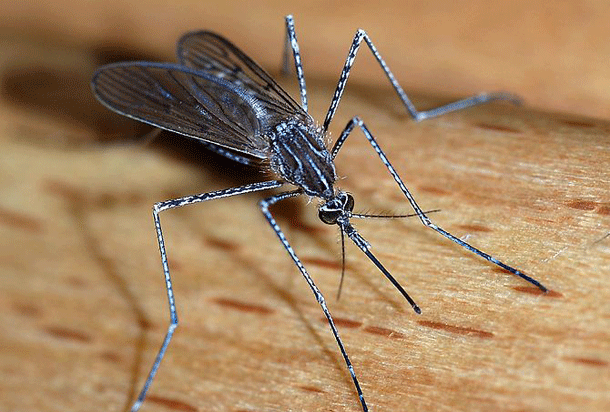 alvesgaspar
 Moving from one of the largest animals in the world we now come to one of the smallest. As small as it is though, it is also the deadliest. It has been estimated that mosquitoes transmit diseases to almost 700 million people annually resulting in 2 to 3 million deaths every year.