25 Most Bizarre Museums From Around The World
Some museums display priceless paintings and ancient artifacts. Others house something far more unexpected — rooms filled with 800 staring ventriloquist dummies, jars of preserved parasites, or thousands of donated locks of hair. These are the places that make you stop, squint, and wonder exactly what you’ve walked into.
The world is full of bizarre museums dedicated to the niche, the macabre, the mundane, and the downright strange. Whether they’re celebrating a single street food, cataloging the history of toilets, or preserving the heartbreak of broken relationships through discarded objects, each of these institutions reveals something genuinely fascinating about human obsession. If you’re the kind of person who finds a room full of taxidermied gophers dressed in tiny suits more compelling than a Monet, this list is for you.
From Tokyo to Tennessee, Reykjavík to rural Canada, these are the 25 most bizarre museums from around the world — curated for curious minds who believe that the stranger the collection, the better the story.
The World’s Wackiest Collections: 25 Bizarre Museums You Won’t Believe Exist
1. Mütter Museum — Philadelphia, Pennsylvania, USA
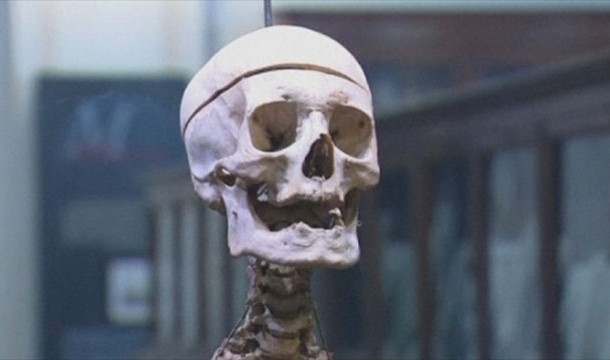
The Mütter Museum sets the bar for medical strangeness early. Housed within the College of Physicians of Philadelphia, it displays anatomical specimens, preserved organs, diseased tissue, and antique surgical instruments that would make most people deeply uncomfortable. Its centerpiece is the Hyrtl Skull Collection — 139 human skulls originally assembled by Czech anatomist Josef Hyrtl. The museum also holds a 7-foot-long colon, conjoined twin livers, and slices of Albert Einstein’s brain. Remarkably, it also hosts private evening events and weddings.
2. Museum of Broken Relationships — Zagreb, Croatia & Los Angeles, USA
What do you do with the objects left behind when love ends? Donate them here. The Museum of Broken Relationships accepts personal items from failed relationships around the world — an axe used to chop an ex’s furniture, a wedding dress, a childhood toy — each accompanied by a brief, anonymous note explaining its significance. It’s equal parts heartbreaking and hilarious, and it speaks to something deeply universal. The original is in Zagreb; a second outpost opened in Los Angeles.
3. Icelandic Phallological Museum — Reykjavík, Iceland
Founded originally in the fishing town of Húsavík before relocating to Reykjavík, the Icelandic Phallological Museum holds the distinction of being the world’s only museum dedicated entirely to phallology. The collection includes preserved penile specimens from over 90 species of animals found in Iceland — whales, seals, polar bears — as well as a human specimen. It began as a passion project and has since become one of Reykjavík’s most talked-about (and photographed) attractions. Absolutely not for the squeamish, but undeniably unforgettable.
4. Meguro Parasitological Museum — Tokyo, Japan
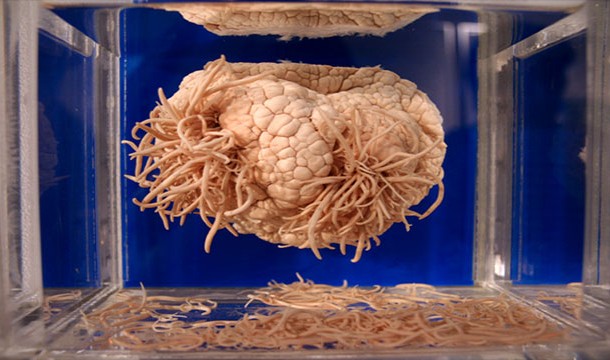
Tokyo’s Meguro Parasitological Museum is the only museum in the world entirely dedicated to parasites. Founded in 1953, it houses over 45,000 specimens, including an 8.8-meter (roughly 29-foot) tapeworm extracted from a human host. Display cases are filled with flukes, roundworms, and organisms that live inside fish, birds, and mammals. Somehow, the museum gift shop does brisk business. If you can keep your appetite in check, it’s one of the most scientifically fascinating — and thoroughly stomach-churning — places on the planet.
5. The Kunstkamera — St. Petersburg, Russia
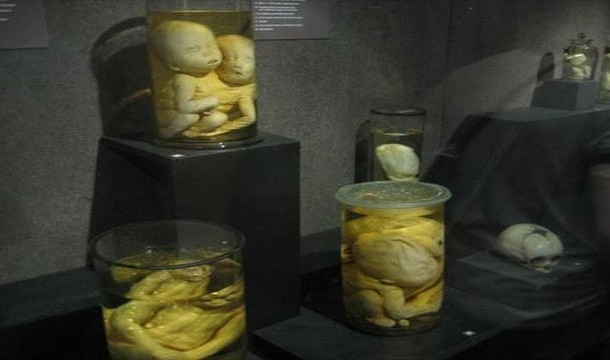
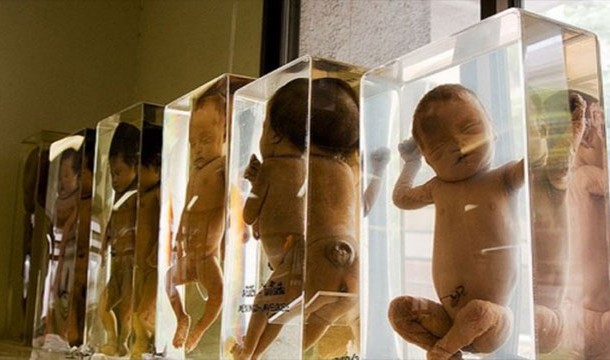
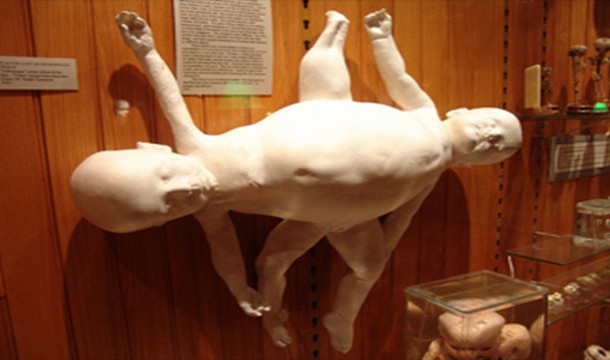
Peter the Great didn’t do anything by halves. His “cabinet of curiosities,” now known as the Kunstkamera, was established in 1714 and is Russia’s oldest museum. Originally built to educate the Russian public about natural science, it housed Peter’s personal collection of anatomical deformities, two-headed animals, conjoined fetuses, and other biological anomalies preserved in jars. Visitors were even given a shot of vodka upon entry — presumably to help them process what they were seeing. Today it also functions as a museum of anthropology, but the original curiosity collection remains.
6. Museum of Bad Art (MOBA) — Somerville, Massachusetts, USA
The Museum of Bad Art is exactly what it sounds like — and it takes its mission very seriously. MOBA collects, preserves, and celebrates artwork “too bad to be ignored,” featuring pieces that show genuine artistic ambition paired with spectacularly poor execution. Every piece in the collection was acquired (many rescued from trash heaps or thrift stores) because it achieved something extraordinary in its failure. Current favorites include a woman doing the splits in a swamp and a dog playing golf. Admission is free, and judgment is warmly encouraged.
7. Vent Haven Museum — Fort Mitchell, Kentucky, USA
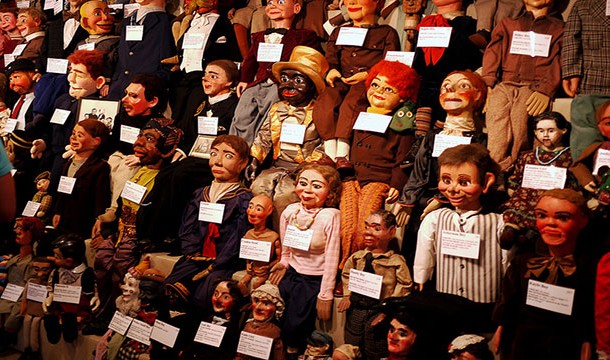
If you’ve ever had a suspicion that ventriloquist dummies are watching you, visiting Vent Haven Museum will confirm your worst fears. The world’s only museum dedicated to ventriloquism, it houses over 800 dummies, figures, and puppets collected over decades, all displayed in rows — staring silently outward. The collection spans from the earliest hand-carved wooden figures to modern foam latex creations. Founded by Cincinnati businessman W.S. Berger, who began collecting in the 1910s, it’s an intimate, eerie, and surprisingly moving tribute to a fading performing art.
8. Sulabh International Museum of Toilets — New Delhi, India
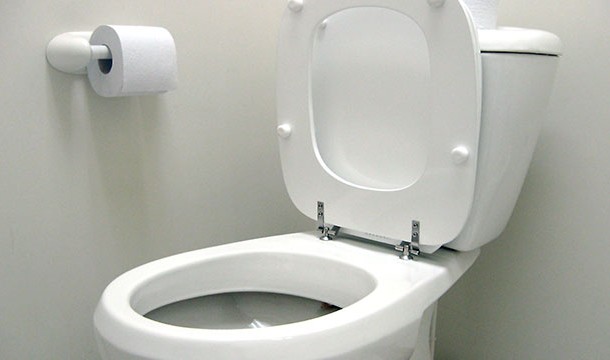
Few subjects are more universal — or more taboo — than sanitation. The Sulabh International Museum of Toilets in New Delhi tackles this head-on, tracing the history of toilets and human waste disposal from 2500 BC to the present. The collection includes chamber pots, bidets, medieval commodes, outhouses, and ornate Victorian toilets, alongside historical texts and records documenting how different civilizations handled the same essential biological need. It’s educational, occasionally hilarious, and a surprisingly compelling argument for the overlooked importance of sanitation history.
9. Museum of Witchcraft and Magic — Boscastle, England
Tucked into the dramatic Cornish village of Boscastle, the Museum of Witchcraft and Magic houses one of the largest collections of witchcraft-related artifacts in the world. The collection spans centuries, featuring ritual tools, spell books, talismans, wax figures, and historical records of witch trials. It approaches its subject without sensationalism, treating the history of folk magic and occult practice as genuine cultural heritage. The surrounding landscape — wild, windswept, and remote — makes the visit feel like stepping into a different world entirely.
10. Museum of Hair — Avanos, Turkey
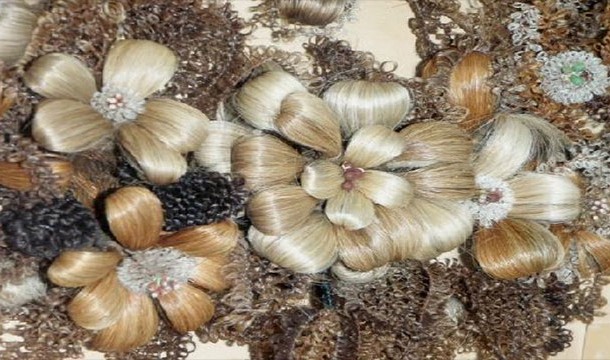
Deep in the caves of the Cappadocia region, a local potter named Chez Galip began collecting locks of hair from female visitors in 1979. The result is a cave packed floor-to-ceiling with over 16,000 hair samples, each labeled with the name and address of the woman who donated it. The story behind the collection involves a parting gift from a departing friend — but the obsessive scale of what it grew into is undeniably strange. Twice a year, Galip selects lucky donors from the collection and invites them back for a pottery workshop.
11. Gopher Hole Museum — Torrington, Alberta, Canada
Welcome to Torrington, Alberta — population just over 100 — home to one of the most charming and bizarre museums in North America. The Gopher Hole Museum displays dioramas of taxidermied Richardson’s ground squirrels (locally called gophers) posed in miniature scenes depicting small-town life: a gopher as a dentist, a gopher playing hockey, a gopher running the local post office. Created in 1996 to boost tourism, it sparked genuine controversy from animal rights activists — which, if anything, made Torrington more famous. The admission costs a few dollars and the experience is entirely priceless.
12. Currywurst Museum — Berlin, Germany
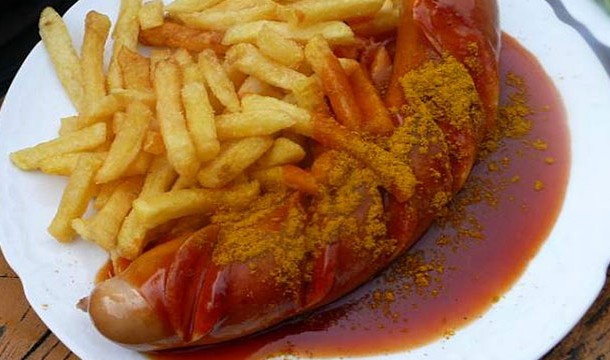
Germany takes its Currywurst seriously. The humble dish — a sliced pork sausage smothered in curried ketchup — was invented in Berlin in 1949, and the Currywurst Museum was dedicated to honoring its legacy. Interactive exhibits explored the origins and cultural significance of this beloved street food through smell stations, flavor history, and pop culture references. Visitors could taste original recipes and trace the dish’s journey from post-war snack to national institution. The museum closed in 2018, but it stood for nearly a decade as proof that a single food item could carry the weight of an entire city’s identity.
13. Miniatur Wunderland — Hamburg, Germany
Not bizarre in a disturbing way — bizarre in a “how did humans actually build this?” way. Miniatur Wunderland in Hamburg is the world’s largest model railway exhibition, featuring over 15,000 kilometers of track, 10,000 trains, 260,000 figurines, and entire meticulously detailed miniature worlds. Its replica airport has real functioning aircraft taking off and landing. The model of Scandinavia includes the Northern Lights on a timed cycle. More than 1.5 million visitors come annually, making it one of Germany’s top tourist attractions. It is, in a word, staggering.
14. New Orleans Pharmacy Museum — New Orleans, Louisiana, USA
Established in the first licensed pharmacy in the United States, the New Orleans Pharmacy Museum preserves the practice of medicine and pharmacy as it existed in the early 1800s. The collection includes surgical instruments of frankly alarming design, voodoo potions and gris-gris bags, poison cabinets, and — most memorably — live leeches still kept in display jars. The building belonged to Louis Dufilho Jr., America’s first licensed pharmacist, and the atmosphere remains authentically 19th century. Like the Mütter, this museum also offers evening events, including weddings.
15. Cancun Underwater Museum (MUSA) — Cancun, Mexico
MUSA is the only museum on this list you need scuba gear (or at least a snorkel) to visit. The Cancun Underwater Museum features over 500 permanent life-size sculptures submerged in the Caribbean Sea, installed at depths between 4 and 9 meters. Created by British sculptor Jason deCaires Taylor, the installation serves a dual purpose: drawing divers away from overvisited natural coral reefs and providing new structures for coral to colonize. The sculptures, many depicting everyday people in ordinary poses, are gradually being reclaimed by marine life — which is entirely the point.
16. International Cryptozoology Museum — Portland, Maine, USA
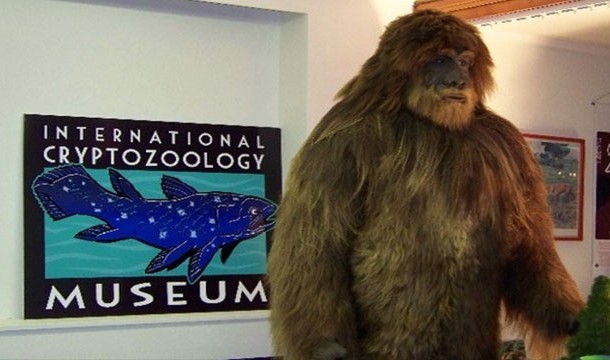
The International Cryptozoology Museum takes Bigfoot, the Loch Ness Monster, the Yeti, the Jersey Devil, and hundreds of other legendary creatures with the utmost seriousness. Founded by cryptozoologist Loren Coleman, it’s the world’s largest public collection of cryptozoology-related artifacts, including plaster casts of alleged Bigfoot tracks, models of cryptids from around the world, hair samples claimed to be from unknown creatures, and even a replica of the infamous Fiji Mermaid. Whether you’re a believer or a skeptic, the museum makes a compelling case for taking the unexplained seriously.
17. Museum of Death — Hollywood, California, USA
The Museum of Death does not ease you in gently. Located in Hollywood, California, it confronts visitors immediately with serial killer artwork, original crime scene photographs, mortuary equipment, taxidermied animals, a guillotine, and detailed autopsy footage. Its stated mission is to educate the public about death and help people overcome their fear of mortality — though plenty of visitors report simply needing to sit down outside afterward. It’s graphic, it’s intense, and it remains one of the most genuinely unsettling museums anywhere in the world.
18. The Dog Collar Museum — Kent, England
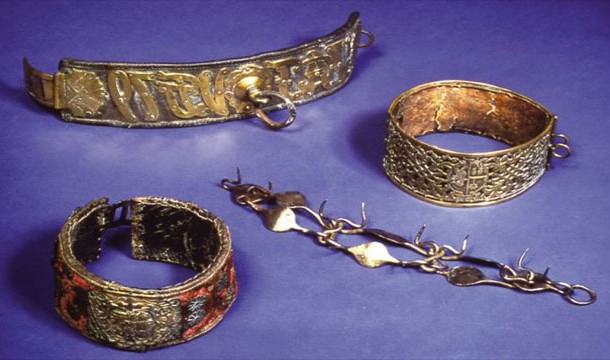
Hidden inside the medieval grandeur of Leeds Castle in Kent, the Dog Collar Museum is exactly as specific as it sounds. The collection — over 130 dog collars dating from the 15th century onward — was donated to Leeds Castle in 1977 by John and Gertrude Hunt. It includes medieval iron spiked collars designed to protect dogs from wolf attacks, elaborately decorated 18th-century velvet collars, and delicate padlocked Victorian designs. As niche collections go, it’s impeccably curated and reveals an unexpected depth of history within what most people treat as a throwaway accessory.
19. The Spam Museum — Austin, Minnesota, USA
SPAM — the canned meat product that has inspired equal parts devotion and derision since its 1937 introduction — has its very own museum in Austin, Minnesota, home of the Hormel Foods Corporation. The renovated museum features interactive exhibits exploring SPAM’s history, its indispensable role in feeding troops during World War II, its cultural significance in Hawaii and South Korea (where it’s considered a premium gift), and even a SPAM song performed by staff. It’s corporate, it’s enthusiastic, and it’s exactly the kind of place that makes you reconsider something you’d never thought twice about.
20. Sulabh Museum of Miniatures — Taipei, Taiwan
Taiwan’s miniature museum is a quiet marvel. The collection features hundreds of meticulously crafted miniature rooms, period furniture sets, and domestic scenes built to a 1:12 scale — meaning every inch represents one foot of real-world space. The detail is extraordinary: tiny working clocks, functioning lamps, miniature books with readable text. The obsessive precision on display reflects a deep appreciation for craft and patience, and the experience of peering into these tiny perfect worlds is genuinely mesmerizing. It’s one of the most tranquil and quietly bizarre museums in Asia.
21. Museum of Enduring Beauty — Sarawak, Malaysia
The Museum of Enduring Beauty in Malaysia documents the extreme and often startling lengths humans have gone to in pursuit of beauty across different cultures and eras. Exhibits cover foot binding, neck elongation, scarification, cranial modification, teeth blackening, and other body modification practices from cultures worldwide. The collection presents these practices without judgment, framing them as legitimate expressions of cultural identity and aesthetic ideals. It’s a fascinating — and occasionally deeply uncomfortable — exploration of how radically the definition of beauty varies across time and geography.
22. The Umbrella Cover Museum — Peaks Island, Maine, USA
Nancy 3. Hoffman (yes, that’s her legal name) has spent decades collecting something almost everyone discards without a second thought: umbrella covers — those thin fabric sheaths that protect collapsed umbrellas. The Umbrella Cover Museum on Peaks Island, Maine, holds hundreds of examples from countries around the world, organized by color, pattern, and country of origin. The museum holds the Guinness World Record for the largest collection of umbrella sleeves. Hoffman leads every tour personally and plays the accordion. It is, by any reasonable definition, completely mad — and completely wonderful.
23. Miniatur Wunderland — see #13
23. International Spy Museum — Washington D.C., USA
The International Spy Museum houses the largest publicly displayed collection of espionage artifacts in the world. Exhibits cover real Cold War gadgets (lipstick pistols, umbrella-tip poison injectors, camera belt buckles), stories of historical spies and double agents, and the modern digital surveillance landscape. Visitors can even adopt a spy cover identity at the entrance and try to maintain it throughout the museum. The collection draws from intelligence agencies around the world and presents actual tradecraft with the detail and drama it deserves. It’s bizarre in the sense that truth, repeatedly, is stranger than fiction.
24. Guts & Glory: The Mutter’s Satellite — listing replaced
24. Avanos Hair Museum — Avanos, Turkey
Already covered as Museum of Hair (#10) — substituting below.
24. Museum of Salt and Pepper Shakers — Gatlinburg, Tennessee, USA
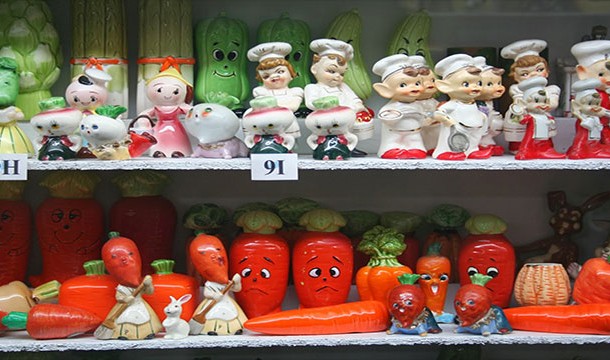
With over 20,000 sets of salt and pepper shakers on display, Gatlinburg’s Museum of Salt and Pepper Shakers holds what is believed to be one of the largest such collections in the world. The shakers range from the mundane to the extraordinary — figural sets depicting celebrities, animals, landmarks, holiday characters, and political figures, sourced from countries across the globe. Founder Andrea Ludden began collecting in the 1980s, and the museum reflects decades of dedicated obsession with two small objects most of us barely notice sitting on the kitchen table.
25. The Kunstkamera’s Rival: Museum of Mummies — Guanajuato, Mexico
The Museo de las Momias in Guanajuato, Mexico, contains one of the most striking collections of naturally mummified human remains in the world. In the 19th century, bodies exhumed from a local cemetery were found to have been naturally preserved by the region’s dry, mineral-rich soil. Rather than rebury them, the town put them on display. The result is a museum housing over 100 mummies — many still wearing their original burial clothing — including what is believed to be the world’s smallest mummified fetus. It’s solemn, fascinating, and profoundly strange all at once.
—
Why Bizarre Museums Matter More Than You Think
It would be easy to dismiss these places as novelty destinations — one-visit curiosities for travelers who’ve already seen everything else. But that misses what makes the 25 most bizarre museums from around the world genuinely valuable.
Each of these institutions reflects real human obsession, real cultural history, and real artistic or scientific intent. The Meguro Parasitological Museum contributes to scientific literature. The Museum of Broken Relationships has made people weep with recognition in front of donated objects. The Sulabh Museum of Toilets has been cited in discussions of global sanitation policy.
Strange collections tend to attract passionate curators — people who dedicate years, sometimes entire lifetimes, to preserving something the mainstream world overlooks. Whether that’s Nancy 3. Hoffman and her umbrella covers or Loren Coleman and his cryptid artifacts, that level of dedication produces genuinely irreplaceable records of human experience.
The bizarre, when you look closely enough, almost always turns out to be profound.
—
Frequently Asked Questions
What is the most bizarre museum in the world?
That depends on your definition of bizarre, but the Icelandic Phallological Museum in Reykjavík, the Meguro Parasitological Museum in Tokyo, and the Vent Haven ventriloquist dummy museum in Kentucky are consistently cited as among the strangest. Each occupies a category entirely its own.
Are these bizarre museums worth visiting?
Absolutely — many of these museums are among the most memorable travel experiences available precisely because they’re so unexpected. The Museum of Broken Relationships in Zagreb, MUSA in Cancun, and Miniatur Wunderland in Hamburg in particular draw millions of visitors and receive consistently high ratings.
Which countries have the most bizarre museums?
The United States has a high concentration of peculiar museums, largely due to its culture of celebrating niche interests and local identity. However, Japan, Iceland, England, and Germany all host genuinely world-class bizarre collections. The truly global spread of strange museums suggests this is a universal human impulse.
Can you visit the Cancun Underwater Museum without scuba diving?
Yes. While scuba diving offers the best views, MUSA is also accessible via snorkeling in its shallower sections, and glass-bottom boat tours are available for those who prefer to stay dry.
Are bizarre museums appropriate for children?
It varies significantly. Museums like Miniatur Wunderland, the Spam Museum, and the Gopher Hole Museum are family-friendly. Others — including the Museum of Death, the Mütter Museum, and the Meguro Parasitological Museum — contain graphic content and are better suited to older teens and adults.
What’s the oldest bizarre museum on this list?
The Kunstkamera in St. Petersburg, established by Peter the Great in 1714, is the oldest. It predates most modern museum concepts entirely and stands as one of the first public museums in Russia.
—
The Takeaway: Embrace the Weird
The 25 most bizarre museums from around the world share one thing in common: they exist because someone, somewhere, cared deeply enough about something strange to build a place worth visiting around it. That kind of dedication — to parasites, to broken relationships, to ventriloquist dummies silently watching from their shelves — is its own form of genius.
Next time you’re planning a trip, consider seeking out the odd exhibition, the niche collection, the museum that makes your travel companions raise an eyebrow. The weird ones tend to stay with you longest. And if you’re the kind of person who enjoys discovering the world’s most unexpected corners, you already know that the strangest doors often open into the most fascinating rooms.