25 Popular Myths Debunked

5

Dropping a penny from the Empire State Building would kill someone

Empire State BuildingPennies only weigh about a gram and they tumble as they fall so the air resistance is significant. If it reaches its terminal velocity it would be falling at about 100 miles/hour. So when it finally hit you on the head with about 1 foot-pound of energy it would hurt a little but you would quickly forget about it.
4

The Great Wall of China is the only man made structure visible from space

Great Wall of ChinaFirst of all we have to define where “space” starts. Is it 50 miles, 100 miles, the moon? For our purposes we will use the International Space Station, and guess what? Thats right, you can’t see the Great Wall of China from there. By the way, the ISS is about 173 miles above sea level which is considered low Earth orbit. That’s barely even space. There are man made structures visible from that height, however, one being the Pyramids.

3

Fingernails and hair keep growing after death

Hair and NailsOnce you die, everything in your body will start to decay, even your hair and fingernails. Although the origin of this myth is disputable it probably stems from the fact that when the skin starts to recede from a dead body it makes the hair and nails appear longer.
2

.999… doesn’t equal 1

.999 repeatingThis can be a hard concept to grasp but the truth is that .99 repeating does in fact equal 1. There are many ways to prove this but here is one of them:

1/3 = .33… and 2/3 equals .66…

1/3 + 2/3 = 1 and .33… + .66… = .99…

If you put those together you can see that 1 = .99…

1

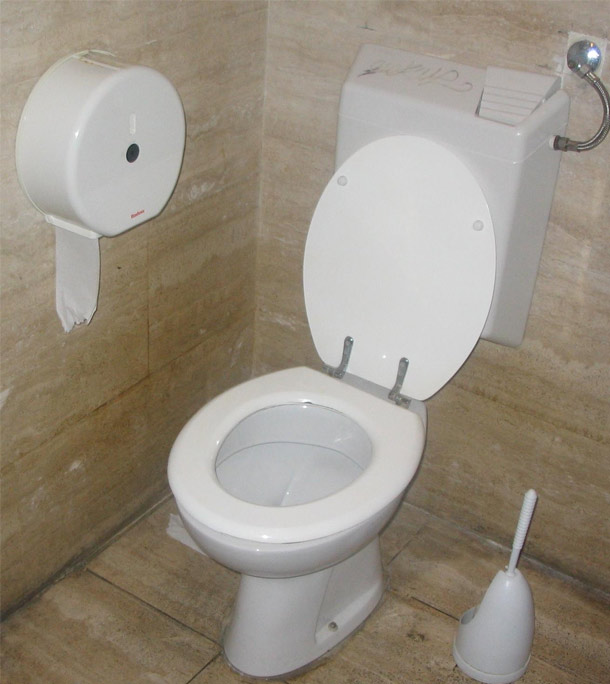
A toilet’s flush will change direction depending upon which hemisphere it is in
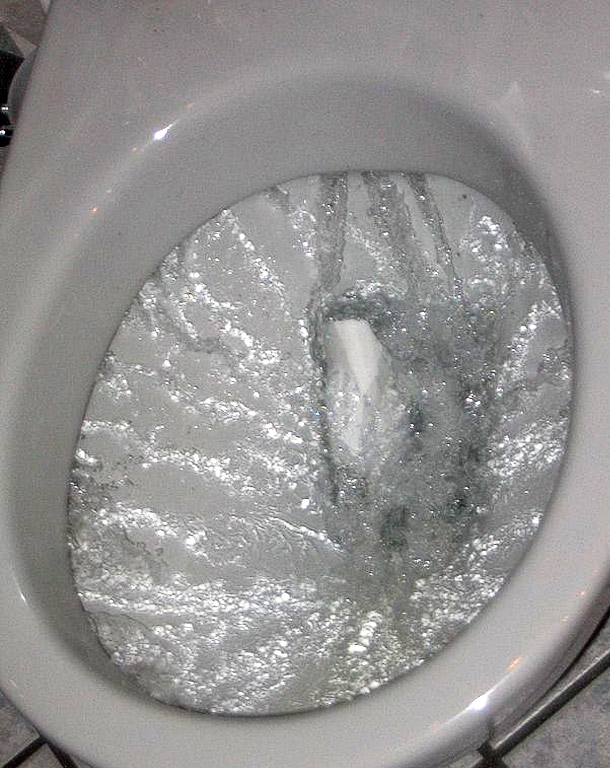
FlushingThis is one of the most ridiculous yet staunchly defended myths to date. Proponents will attribute this to the Coriolis Effect which is derived from the rotation of the Earth. While this effect does influence air masses or other large environmental structures it has absolutely no effect on the direction your toilet drains.


1 2 3 4 5

David PeggAbout David Pegg

David is the editor-in-chief of List25. He has a Masters degree in International Business from University of Florida. He loves to break dance, do flips, play guitar, and everything else that is fun. Follow him on Twitter @iamdpegg

Comments

  1. eddie says:

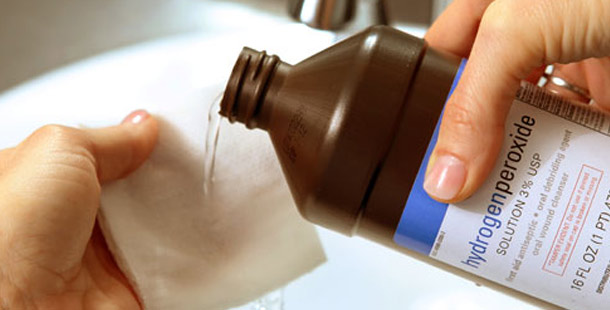
    Hydrogen Peroxide helps wounds heal <– regarding this, this wasn't the knowledge i know of this matter. i thought it was to clean the wound and kill bacteria, or so i was told. the bubbling was killing bacteria that may have found its way onto the wound, and that i should keep applying it until the bubbling has gone. i put few droplets of iodine after (i know iodine is a bacteria killing chemical)

    • Erynn says:

      Problem with that is it DOEs destroy skin cells. There are far better topical skin anti-bacterial agents; you’d be better off using medical alcohol, for instance. Peroxcide is an excellent disinfectant for household uses such as cleaning vegitables and kitchen surfaces; because of it’s effect on the cells of the body, it inhibits healing and that makes it less than optimal. The bubbling is because it comes into contact with the enzyme catalase; which is found in broken cells, blood, and yes, a few strains of bacteria – but mostly it stops bubbling because it’s used all the catalase in YOUR cells, not the bacteria.

      • Justin Walker says:

        I’m still sure about this. I been doing this for years. The only I don’t get is that Ive done this on wounds that appearlly really red and infected, which is when I go to the store and buy the stuff. Over days of using it, I notice the bubbles slowly start to be less and less.. and finally when its almost healed it won’t bubble at all. It seems like if it was just attacking the cells it would never heal or it would always have the same reaction. Very odd.

        • Erynn Schwellinger says:

          It reacts to your blood. That means that as you heal – as you stop bleeding – it will stop bubbling. It also reacts, as I said, to broken cells. As they heal, it will reduce bubbling. It’s actually the expected result that it bubbles less as you heal. The problem is it actually *delays* healing, as well as disinfects. You’d be better to try an alternative anti-bacterial. You could even test it yourself if you manage to get yourself into a situation with two similar injuries (just don’t go cutting yourself up to test it :P )

  2. Erynn Schwellinger says:

    Oxford english dictionary:
    Irregardless means the same as regardless, but the negative prefix ir- merely duplicates the suffix -less, and is unnecessary. The word dates back to the 19th century, but is regarded as incorrect in standard English.

    Lets see that again: “is regarded as incorrect in standard English.”

    One more time: “incorrect in standard English”.

    Oh yea. That’s good stuff right there.

  3. Sath says:

    1/9=0.11111111111
    1=0.1111111111*9
    1=0.999999999

  4. Angel Singer says:

    Nice list, and I’m afraid I lack the mathematic acumen to argue the burning question, so I’ll turn to the three I can reasonably comment upon.

    First, I agree with the commenter who says that treating a wound with peroxide is about cleaning it, not healing it. Like many young ladies of my age, I was taught to routinely clean my earrings in peroxide.

    As for the poinsettias, I’ve always thought they got a bad rap due to being confused with mistletoe, another holiday staple. However, if your cat is elderly or in bad health, it’s probably best to banish the poinsettia anyway, on the “better safe than sorry” principle.

    Finally, the one I actually have experience with: chameleons. In college I worked for a retired vet who found retirement boring and opened an exotic pet store (he also continued to treat animals, as he was the only vet in the area with experience with exotics). I worked there while in college. We heard the chameleon myth quite often, and my boss routinely told customers: “I studied various forms of chameleons for thirty years, and have come to the conclusion that chameleons blend for one reason above all others: they can.”

  5. Charlie says:

    Take any calc 2 class in college and you will learn that .9 repeating is equal to 1. Love people that don’t accept facts because they cant comprehend them.

  6. Megan says:

    I attend an accredited 4-year university (Temple University) and we proved that 0.999999 repeating equals 1 in my 3000 level mathematics course. It is true.. hard to wrap your head around, but true nonetheless.

    • Sherry says:

      I do believe the repeating .9 does dwindle out to 1, I think the argumentative question here is at what repeated 9 would safely equal to 1. Obviously, .9 and .99 could be argued will not equal 1, so where would be the best place to say “oh stop splitting hairs and just call it 1 already”?

  7. T Cohen says:

    I might respect your opinions if you refrained from gratuitous abuse and used civil language.
    Also, this site’s writers are posting these lists for a little fun. Lighten up, already!

  8. tassie devil says:

    I would love to see these maths nerds just put down their pencils and have a good old fashioned fist-fight.

  9. A Smith says:

    #19 Irrelevant: ‘Vegetable’ is not a botanical term, so you are comparing apples and oranges. As noted above, other than the tomato–botanically a fruit, culinarily a vegetable–there are many culinary-deemed vegetables that are, botanically, fruits including eggplant. Now tell me, smart guy: is that grilled corn cob on your dinner plate a vegetable or a grain? In case you’re wondering, it’s both for the same reason tomatoes and eggplants are vegetables as well. Vegetable is a culinary term for an edible part of a plant that is savory rather than sweet. Mind-blowing fact: that corn you ate is also botanically a fruit. Corn: grain, vegetable, fruit. What’s so special about tomatoes again?

    #3 “…he fact that when the skin starts to recede from a dead body it makes the hair and nails appear longer.” How does skin recede *from* a dead body? What’s actually happening is that the skin is losing moisture and as it becomes dessicated, the surface area shrinks which reveals previously built keratin complexes (hair and nails) just under live skin awaiting to emerge as newly built proteins cells push out the older ones. It is a fact, however, that cornification (the process of building keratin protein complexes) ceases at death. So, your clumsy explanation that hair and nails do not continue to grow after death is technically correct.

  10. Jack says:

    And to think that all these years snapple caps have been lying to us…

  11. b boy bubbles says:

    dude what the freak

  12. Mmmyep says:

    Saying irregardless is a word just because you can find a dictionary listing of it is like saying ‘Honorificabilitudinitatibus’ is a word. You can find it at http://www.allwords.com/word-honorificabilitudinitatibus.html if you’re wondering, but to sum up, it’s a word Shakespeare made up to describe being able to achieve honors. Being in the dictionary doesn’t mean a word is valid.

    Irregardless has a double negative (irr- and -less used in conjunction) and therefore doesn’t make sense at all when used as a synonym for regardless. If you want to use irregardless, then I suppose you would also want to use ‘should of’/'could of’/etc despite the fact that they make no sense if you actually understand what should and of mean. It’s my opinion that you should’ve thought a little more carefully about that.

    • yes. says:

      very well put. when people say “should of/ could of” what they really mean is “should’ve/could’ve” which of course are contractions for should have and could have. ignorance is really a pet peeve of mine..

    • Brownian says:

      Unfortunately for your claim, dictionaries are even less authoritative with regard to the legitimacy of a word than is whether or not people commonly use and understand that word (further, appeals to logic hold even less water). And according to the greater authority of use, “irregardless” is a word as much as “ain’t” is, no matter what the dictionaries say or how ignorant you may consider those who use it. Languages and their lexicons evolve whether or not the prescriptivists wish it (and trust me when I say I’m as appalled at the spread of the greengrocer’s apostrophe as you likely are).

      Refutations of this comment will only be accepted in Proto-Indo-European, not these modern slangs and cants the kids today are all using, such as “English”.

  13. Race Dowling says:

    The edible part of the tomato is the fruit, but this is also true of other things commonly classed vegetables such as cucumbers, peppers, and squash.

  14. Tom says:

    This article is stupid. The Author is stupid.

    - Where are the references for these debunks?
    Sure some of them hold true but just because you say it is, doesn’t mean its true, you’re trying to debunk myths but really you’re just spreading them in the process.

    - Hydrogen Peroxide
    Yes it works I’ve seen it with my own eyes, aside from that though what, the f**k kind of statement is this: “Its probably the hydrogen peroxide attacking you.” You’re a f**king moron. THAT statement is the reason why myths exist in the first place, once again, nice debunking Sherlock.

    I won’t go on because this is a waste of my break.

    • Tom says:

      Oh yeah, and that stupid Fractions Myth. What the hell? That’s like saying the decimal places in the number representing Pi stops when I say it does, because I say so. What a moron.

      • Elliot says:

        π is irrational; never repeating nor ending; cannot be expressed in the form of p/q, where p and q are integers. 0.9999 repeating is a rational number, because although it is never ending, it is repeating. Because 0.9999 repeating is a rational number, it can be expressed as p/q, where p and q are both integers. The integers which express 0.9999 repeating are p=x, and q=x-1, to the limit where
        x–>∞. lim x–> x/(x-1) = 1. ∴ 0.9999 repeating=1 . QED.

        • Elliot says:

          My bad, “lim x–> x/(x-1) = 1″ is supposed to be “lim x–>∞ x/(x-1) = 1″

          • baylie heft says:

            u guys quit being babies!!!

          • nick says:

            i understand what you saying but take into consideration the definition of a limit. the limit of a function is the value to which it tends to, but never reaches. sure the limit of 0.9999.. recurring tends to 1, but that is not to say that 0.999 recurring will equal 1. you have to take into consideration the margin of error with 0.999.. = 1, no matter how close the value of 0.9999 recurring gets to 1 it will always be less than 1, although the value to which it is less than 1 will keep decreasing.

    • Chetan says:

      I am pretty sure Hydrogen Peroxide does prevent the growth of new cells to some extent.

      Looked up Hydrogen Peroxide on wikipedia and found this
      “It is a common misconception that hydrogen peroxide is a disinfectant or antiseptic for treating wounds.[34][35] While it is an effective cleaning agent, hydrogen peroxide is not an effective agent for reducing bacterial infection of wounds. Further, hydrogen peroxide applied to wounds can impede healing and lead to scarring because it destroys newly formed skin cells.[36]”

      This is however, the first time I have heard someone say that Hydrogen Peroxide attacks you when you apply it to wounds O.o

    • Brian Pegg Brian says:

      Take a deep breath and calm down…Your asking for the author to reference his sources, yet your justification for the use of hydrogen peroxide is that you’ve seen it work with your own eyes? search hydrogen peroxide on wikipedia and read under therapeutic use.

  15. anon says:

    #2 is so stupid I can literally feel my I.Q. dropping at its justification. .9999999… is arbitrarily close to 1 but infinitely far from it. Clearly your puny liberal arts brain just can’t grasp that notion. Here’s a big clue: “1/3 + 2/3 = 1 and .33… .66…= .99…” Notice you didn’t get the same answer? That is because .99… is a decimal approximation of a number arbitrarily close to 1, but not fucking equal to it.

    • Chetan says:

      Let us use ‘ to denote bar, so 0.9′ = 0.9999999….

      if x = 0.9′
      then 10 * x = 9.9′
      10 * x – x = 9
      9 * x = 9
      x = 1

      If you don’t believe me, repeat this exercise for 1/3
      x = 0.3′
      10 * x = 3.3′
      9 * x = 3
      x = 1/3

      http://en.wikipedia.org/wiki/0.999

      #2 is correct

      • Justin says:

        you’re an idiot. 10*x-x=9 doesnt equate to 9*x=9 …it equates to (10*x)/9=x

        • Elliot says:

          What the fuck are you smoking? 10*x-x=9 does lead logically to 9*x=9. Let me slow down the steps for you:
          10*x-x=9
          10*x-1*x=9
          (10-1)*x=9
          9x=9

          Maybe you should go back to pre-algebra.

        • Chetan says:

          How did you even get to (10*x)/9 = x?
          That equation implies that 10 = 9 or x = 0, which means that either 0.99999… = 0 or 9 = 10 both of which are false.

          Thanks for calling me an idiot. =)

      • James says:

        I don’t believe you. I repeated it for 1/3 and still don’t believe you. Your equations don’t equate

        • Chetan says:

          You can repeat this exercise for any rational number. A rational number is of the form p/q. Unless the prime factors of q are 2 and 5 only, p/q has an indefinite decimal notation.

          For example 1/7 = 0.142857142857…
          Here 142857 is repeated indefinitely.

          If a number has a repeating indefinite decimal notation, it is a rational number and can be written in p/q form. The method I described is used to convert decimals into their equivalent p/q fractions.
          ->
          x = 0.(142857)’
          1000000x = 142857.(142857)’
          999999x = 142857
          x = 1/7

          0.999… must therefore also have a p/q form since 0.999… has repeating 9s. That form will turn out to be 1/1.
          Also, try 2.999… 44.999…

          You can always read the webpage I linked to

          • Colton says:

            You can also prove that 1=2, that doesn’t mean 1 = 2 though.
            Math is a fickle thing in the way that you can write anything you want down, and say it is right, but somewhere there is a flaw.
            I am impressed though with what you came up with. Makes me miss my high school math teacher. He was awesome.
            Anyway, yeah. Just because you can write it out doesn’t mean 1 = .9′
            .9′ = .9′, it is not that hard to grasp. It will get infinitely close to 1, but will never reach it, that is why it is .9′, and not 1.
            That is like saying if you write the letter A enough times, it will become the letter B.

    • Jon says:

      “.9999999… is arbitrarily close to 1 but infinitely far from it.”

      Ok first, you clearly mean it’s infinitesimally far from it, which is the same thing as arbitrarily close. For it to be infinitely far from it their difference must be infinity, which means one or both of them would have to be +-infinity.

      Second, to claim that they’re any amount of distance from each other is to claim that there is something in between. Our real number system has no nonzero infinitesimals, so good luck finding anything between the two. .9 recurring is another way of writing 52/52 which is another way of writing 100-99 which is another way of writing 1. They are all the same real number.

    • Elliot says:

      0.3333 repeating is not a decimal approximation of 1/3, it is the decimal equivalence to 1/3.
      0.3333 repeating = “∑i=1∞3(10)^i” = 1/3 That is not a silly proof, but a definition. Base ten is great in all, but the problem is you can’t write things like 10/3 without writing on and on forever. (This is one reason people thing base twelve is better). But the point is, so long as it is .3333 REPEATING, then it equals 1/3 anything short of infinity would be, as you said, not 1/3, but an approximation. This also goes for 1/6. Therefore, 1/3 + 1/6 = 1, and .3333 repeating + .6666 repeating = .9999 repeating, and .3333 repeating = 1/3 and .6666 repeating = 1/6, therefore .9999 repeating = 1
      QED.

  16. Kory says:

    It’s really great that poelpe are sharing this information.

  17. Eric Rose says:

    #2 is the stupidest thing I’ve heard

  18. hmm... says:

    well though i have no knowledge of most of the things on this list, i do in fact have knowledge of mathematics. and though number 2 is correct in a sense, in complete actuality, it is not true. .99 repeating is not equal to the number 1. the repeating decimal .99999… is in fact an asymptotic function. something that comes closer and closer to the goal ( in this case 1) but never reaches it. and the relationship between 1/3 and .3333 is not exact. it is merely symbolic.

    • Chetan says:

      Sum of infinite terms of a geometric series is not asymptotic.

      Therefore
      0.999… = 0.9 + 0.09 + 0.009… = a + a*r + a*r^2…
      where a = 0.9 and r = 0.1
      this means, 0.999… = a/(1 – r) = 0.9 / (1 – 0.1) = 1

      • Jon says:

        So do you even do maths or…

        The sum of INFINITE terms in a sequence is one of the of the definitive asymptotic equations. How could you even think it isn’t, it involves summing an unlimited number of things, did you expect it would reach a point where it just exactly equals the sum because it ran out of things to add?

        What you’re thinking of is sum(lim[n=0->inf](a*r^n)) = a/(1-r). The fact that it’s a limit should immediately clue you in to the fact that it’s an asymptotic equation.

    • Geek Daddy says:

      X = 0.999 (repeating)
      Multiply each side by 10
      10x = 9.999…
      Now subtract x from both sides
      as x = 0.999….

      10x-x= 9x
      9.999… – 0.999… = 9
      9x=9
      x=1
      0.999… = 1

      • SmartAz says:

        I swear this gets too technical. If you really want to break it down, 1 is a two-faced number anyway. It is the only number that adds value to a mathematical problem when used in addition, but has no value in multiplication. Example:

        1+1= 2; 2+1= 3; 3+1= 4; etc
        1×1= 1; 2×1= 2; 3×1= 3; etc

        and then someone might comment about how 1 holds a place in the tens column of a math problem, which will prove my point that people get too technical. Yes, this is a stupid comment and brings no positive input to the conversation but makes you think.

        To all that do argue .999999 equals 1; if someone asked you an exchange of a Paco for a penny, would you do it because they are the same thing?

        out of all the things to stand your ground on to the point of arguing and being uncivil, is one-thousandth and less really worth it?

  19. matt says:

    “In fact, they can be taught to respond to different light, music, or other sensory queues.”

    -queues are lines. cues are prompts

    “Proponents will attribute this to the Coriolis Effect which is derived from the curved nature of the Earth.”

    -the Coriolis effect has nothing to do with the “curved nature of the Earth”. rather, deflections of moving objects from a straight line because of the rotation of the Earth

  20. Walter says:

    I don’t think anyone ever says that hydrogen peroxide speeds healing. Isn’t it just used to clean out wounds? Liked the rest of the list, though.

  21. Derek says:

    Fact #2 on this list is incorrect. The article misunderstands the implications of the infinitely repeating numerals after the decimal point. 0.99999… does not equal 1 in the same way 0.33333… does not equal 1/3. There is an inherent flaw in the conversion of fractions to decimals. The decimals are expected to continue in their pattern infinitely, never actually becoming the fraction they are made to represent. 1/3 + 2/3 is 1. The math evens out perfectly. 0.33333… (which is impossibly close to, but still less than 1/3) + 0.66666… (which is impossibly close to, but still less than 2/3) = 0.99999… (which is impossibly close to, but still less than 1). The only number that is equal to 1 is 1.

    • Colton says:

      Thank you..
      I read it, and was like, “Oh hell naw!” Now I don’t have to.

    • Mark says:

      I think they were looking at it from the perspective of equalities.

      a better example would have been:
      1/9=.111111111…
      2/9=.222222222…
      etc etc until you hit
      9/9=.99999999999
      but 9/9=1

      in that sense, it’s all about the perspective of how you look at the fractions.

    • Cameron says:

      It’s just a different notation for the same thing. There are several proofs for what is being expressed. A few simpler ones have already been shared. Here’s something that is thought provoking:

      What is 1-.999999… equal to? Well 0.0000…. of course. Does a number follow the last zero in this? Of course not. If there are infinitely many zeros at the end of that, then there is no way that a 1 or a 2 could follow. There is no pot of gold at the end of that rainbow. Furthermore, if these were two distinct numbers, then an average could be found. So what number is between .999repeating and 1? One could make this an incredibly complicated problem, but pulling all of the simple fifth grade mathematics into this is sufficient. It’s intuitively obvious. If .99999… is closer to 1 than any real number so 1-.99999… must be smaller than every positive number. What is smaller than EVERY positive number? 0 of course. So 1-.999999…=0, so 1=.9999…

    • bray says:

      here’s a better example…

      1/9=.111111…
      2/9=.222222…

      8/9=.888888…
      9/9=.999999…=1

      • Cody says:

        Next time i get 99 cents change back after a purchase, im going to argue the clerk that im supposed to get 1 dollar back….. And just bc some college math majors said they have proved it, the clerk will hopfully realize that he/she was wrong in the amount of change he/she has givin me back.. Just because some nerds have no life, this could work out in my favour ;) every cent counts since obama has been elected. Oh jeeze maybe ive just opened a whole new can of worms…

Add a Comment