First, they involve big muscle groups. The more muscles involved simultaneously in an exercise the higher the anabolic effect of the movement, which causes overall muscle growth. Second, they are relatively easy on your joints, minimizing the risk of soft tissue injury. Unlike muscle, the soft tissue around the joints (tendons and ligaments) has limited blood supply and therefore it takes more time to heal. Muscle recovers faster than joints, therefore performing low impact exercises that do not overstress the joints favors recovery and speeds up muscle growth. Of course, weight lifting is a big stress for the neuromuscular system, anyway. But, choosing exercises that do not overstress the joints can make a difference in how fast you develop these muscles. In light of this, here are 25 faster muscle building exercises. For more exercise tips, check out Steadystrength.com Photo credit: www.BodyBuilding.com
Deadlift
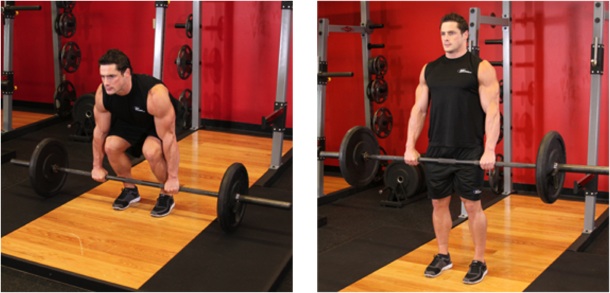
The deadlift is regarded by many as the king of mass builders. And for a good reason since it works more muscles simultaneously than any other strength training weight lifting exercise. It effectively adds slabs of muscle to the lower and upper body. When properly executed it is risk free. It employs and strengthens over 25 major muscles including those of the entire back (lower, middle, upper), the shoulders, abdominals, forearms, hips (gluteal muscles) and the legs (hamstrings and quadriceps). The deadlift is a true measure of somebody’s strength. The deadlift world record is 1,015 lb by Benedict Magnusson.
Bent Over Row
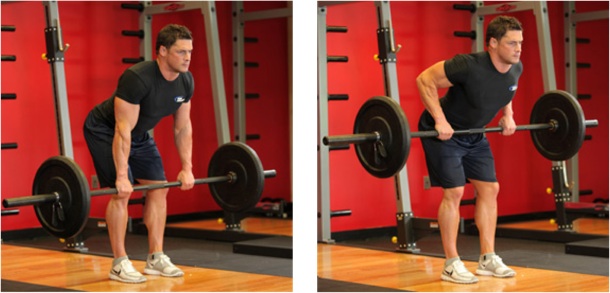
It’s been called “Back Thickener” because it stimulates the growth of the entire back. It employs 8 major muscles in the lower, middle, and upper back. The bent over position also calls for the involvement of your abs (rectus abdominis and obliques) to stabilize your core region. It’s relatively difficult to perform bent over rows, which is why it is an overlooked exercise. To avoid injury you must keep the back straight, not rounded, and your trunk tight. A pronated (ovehand) grip increases the activation of the shoulder muscles while a supinated (underhand) grip places the emphasis on the lats and biceps. The problem with the bent over row is that while your back may be strong enough to row the weight, you may not be able to lift it because you just can’t stay balanced. The weight pulls you forward.
Barbell Squat
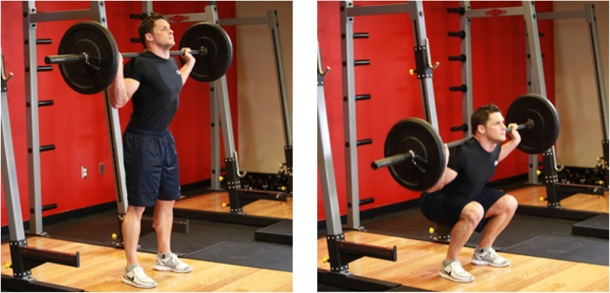
Barbell squats are excellent for increasing muscle size not only in the legs but in the whole body. Doing heavy squats triggers a systemic anabolic effect that promotes overall muscle growth. The squat employs mainly the quadriceps (quads), hamstrings and the gluteus maximus. It also involves the hip adductor (inner thigh) and other stabilizer muscles. There is some injury risk involved though, even if you do the exercise the right way. Placing a heavy barbell on your shoulders creates an unhealthy vertical compression on the spine. Moreover, in the lower part of the motion, knee injuries are common. To avoid knee injury, make sure your knees do not move beyond your toes. Other than that, heavy squatting guarantees rapid muscle growth.
Barbell Lunges
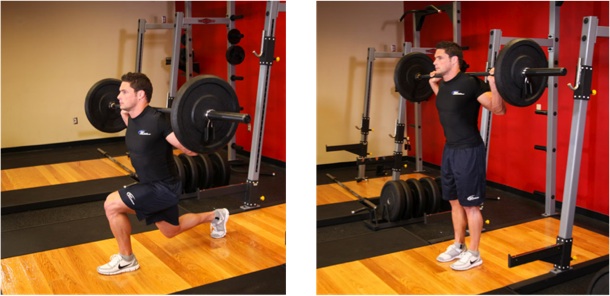
Barbell lunges are an excellent, safer, alternative to barbell squats. Lunges work each leg separately but fully. When performing lunges, a big part of the resistance comes from your own body weight. Therefore the exercise requires relatively little weight on the barbell. If you do barbell squats with 240lb, it is unlikely you can lift more than 150lb on a barbell lunge. That means lunges are less taxing on your spine. In addition, since your knee does not travel beyond your toes, lunges are safer for your knees than squats.
Leg Press
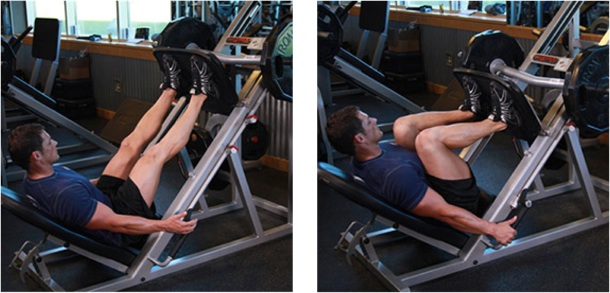
When compared to squats, the leg press is a less compound movement. The leg press is performed from a seated position and therefore it employs fewer muscles than the squat. It’s easier and safer, too, because it is performed in a fixed pane of motion which requires minimal core stabilization. That means, your abs and back muscles are not that much involved. The relatively short hip Range of Motion (ROM) decreases the involvement of the hamstrings and glutes thus placing the emphasis on the quads. Still, the leg press is superior to the squat in that it can more directly target the quads. With the hip adductor (inner thigh) and stabilizer muscles less involved, and the seat support, the leg press allows you to focus all your energy on your quads and hit them really hard with a tremendous load.
Chin ups (Pull ups)
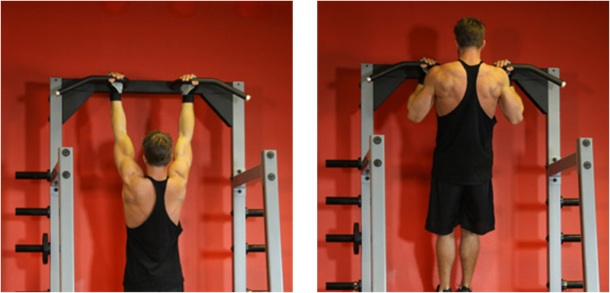
Chinups are very effective boosters of upper body growth. They workout the muscles of the upper back (latissimus dorsi), shoulders (posterior deltoid), arms (biceps), and forearms (brachialis). Chest muscles get activated a little bit, too. In chinups the palms face you, while in pull ups the palm face away from you. Pull ups employ teres minor (one of the four rotator cuff muscles) more than chin ups do, therefore, if your rotator cuff is hurting do only chin ups—you don’t want to injure rotator cuff muscles and their tendons.
Dumbbell Row
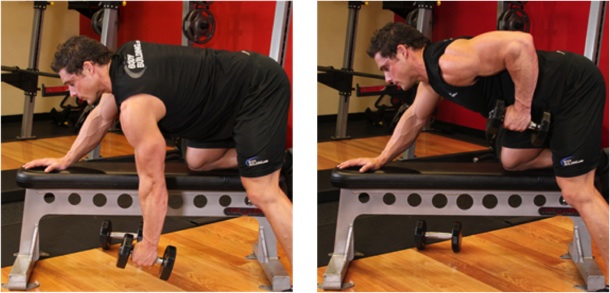
Whether performed with a dumbbell or a barbell, the bent over raw is very effective for working the lats—the largest muscles of the back that run along each side of your torso connecting your upper arm to the middle and lower back. There is a difference between barbell and dumbbell bent over rows as far as the muscles involved. Due to the bench support in the dumbbell rows, the lower back (erector spinae—a group of muscles that run along each side of your spine from the pelvis all the way up) is not targeted almost at all. Moreover, in dumbbell rows, the torso is parallel to the floor activating mostly the lats whereas in barbell rows the torso is bent 45 degrees which places the emphasis on rear delts and traps (upper back). Finally, the one-arm dumbell row works each side separately which allows you to focus on the side that is less developed.
Barbell Shoulder Press
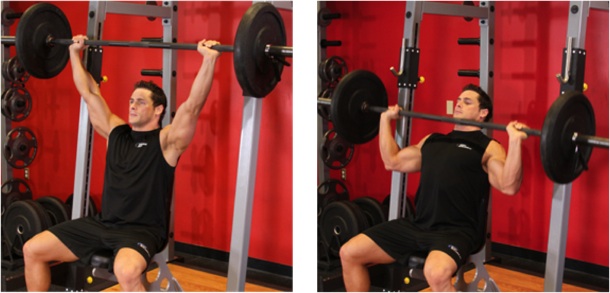
The barbell shoulder press is a great muscle builder for the whole shoulder cage. The weight is pressed from the shoulders straight upwards until it is locked out above the head. It is a compound exercise that involves the shoulders, chest, and triceps. It can be performed either from a seated or standing position. The latter allows you to lift more weight due to the leg drive involved. If you rest your upper back on a wall or bench you increase the involvement of your upper chest.
Dumbbell Shoulder Press
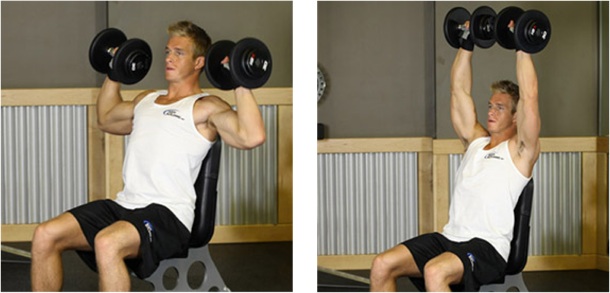
The dumbbell shoulder press targets specifically the shoulders. Unlike the barbell press, the dumbbell press does not involve as much the triceps and chest, allowing you to focus on your shoulders. Many people prefer the barbell over the dumbbell press because they can lift more weight with the barbell. But what they fail to understand is that the barbell actually works, to a significant degree, their upper chest and triceps, not their shoulders. I saw a significant increase in my shoulders size when I switched from barbell to dumbbell presses.
Dip
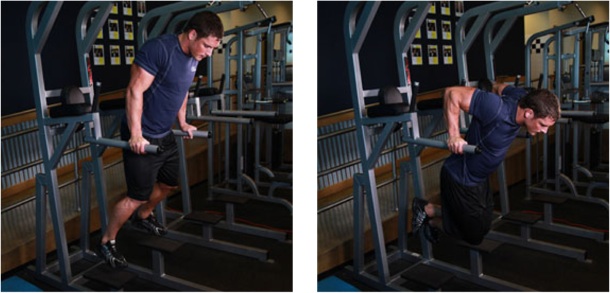
The dip exercise activates primarily the triceps. It’s a basic movement that works all three parts of this muscle group. It also targets the anterior deltoid, the chest muscles and the rhomboids in the back. The dip allows you to load your triceps as no other exercise. The problem with the dip is that it overstresses the shoulder muscles, the pecs, and the elbows. If you have troublesome shoulders, you should skip this exercise. The injury risk can be minimized if one limits the range of motion.
Standing Barbell Curl
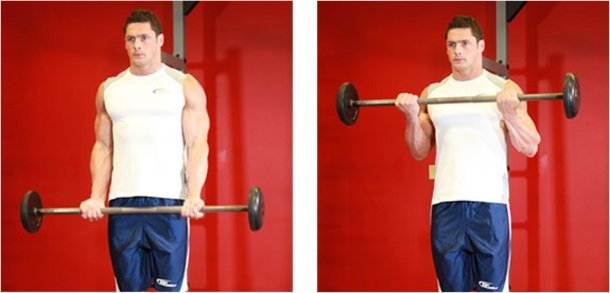
Doing barbell curls is probably the fastest way to grow the most famous muscle in the human body— the biceps brachii muscle. Other exercises, such as the dumbbell curls, hammer curls, cable curls, concentration curls, supinated bent rows, and chin ups, do not target the biceps as directly as the barbell curl. The barbell curl is the most “compound” bicep movement of all employing all bicep muscles. When performing this exercise do not swing your torso, otherwise you are allowing momentum, not your biceps, to lift the weight for you.
Stiff Legged Deadlifts
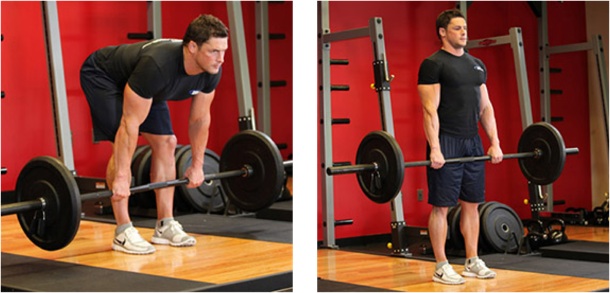
One of the best exercises for your hamstrings, the stiff legged deadlift, is a modification of the deadlift. It is designed to eliminate the involvement of the quads and place the tension on the glutes and hamstrigs. It activates the lower back, too. To avoid injury in your hamstrings, do not lower your torso beyond mild stress; that means the bar doesn’t go lower than the knee caps.
Bent Over Long Bar Row
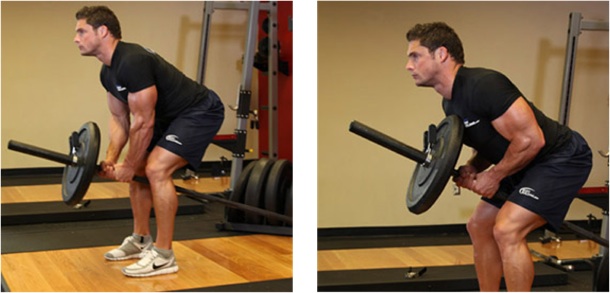
The bent over long bar row is a great back builder and many prefer it over the barbell row. The difference between the two is that the range of motion is shorter in the long bar row, allowing you to lift more weight. Another difference lies in the grip (close or wide). Different grip involves different back muscles. The close grip in the long bar row does not allow the back muscles to fully contract as in the bent over row. Yet, many find it more effective as a mass builder compared to the barbell row because the weight moves on a more even plane and offers better spine stability.
Close Grip Bench Press
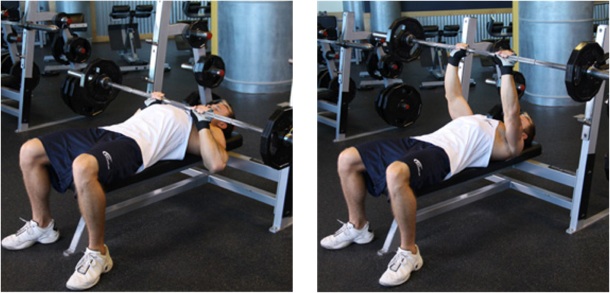
The close grip bench press is the safest and more effective triceps exercise you can do as it activates the whole tricep muscle. It involves the chest and shoulder muscles in addition to the triceps. Unlike the dips, it does not pose a threat for the shoulders. Use a narrow grip but do not grasp the bar with your hands less than 4 inches apart otherwise you could hyper-adduct the wrist joint. Load the bar and press hard.
Standing Dumbbell Calf Raise
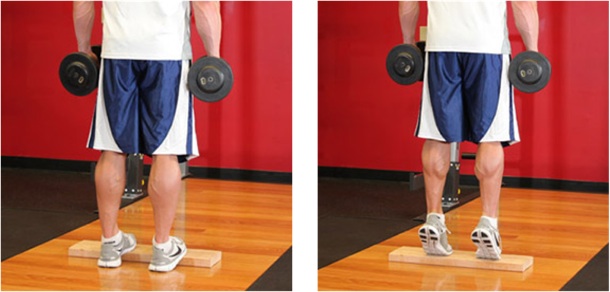
The dumbbell calf raise allows you to fully workout your calves at home without machines. To build good calves you need to get a good flex on top and a controlled stretch at the bottom. All three calf muscles will get activated. Calf raises can be performed in various ways targeting the two calf muscles (gastrocnemius, and soleus) from different angles. For example, when calf raises are performed from a seated position (seated calf raise) the gastrocnemius is stretched less.
Clean and Jerk
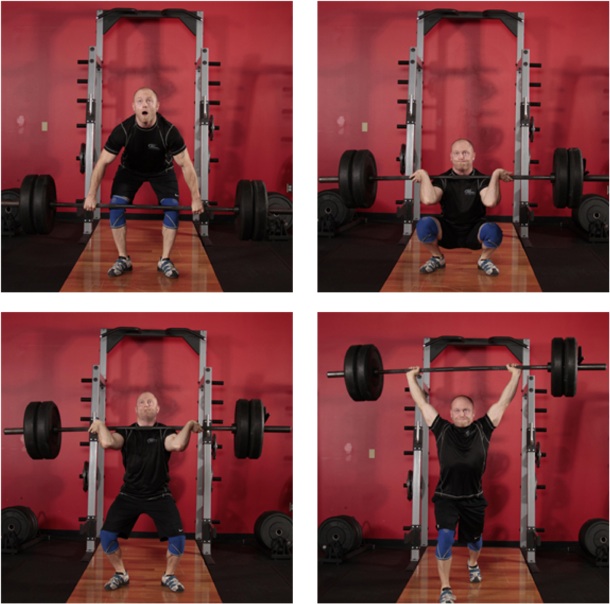
The clean and jerk works the full body. It is a great test of one’s strength given that it employs more muscles than any other exercise in a series of movements. The first part of the movement (clean) is a dead lift involving the legs (glutes, quads, hamstrings, and calves) and lower back (spinal erector). Once the deadlift is over, the legs, traps, middle back, and shoulders assist to bring the bar into a resting position right in front of the neck. Then, in the second part (jerk), the legs, shoulders, chest, and arms bring the bar right above the head. The Olympic record is at 236kg for men and 187kg for women.
Front Squat
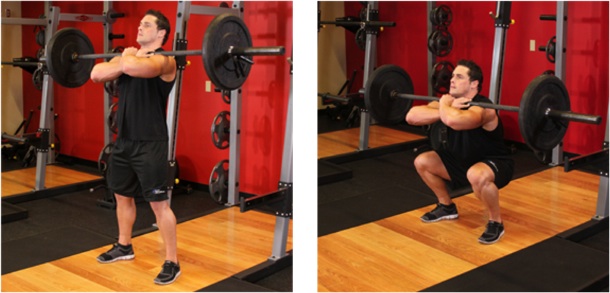
Squats are the most basic and all inclusive exercise you can do for your lower body. Like the back squat, the front squat is a fantastic muscle growth booster. Many people think that the back squat focuses more work on the glutes, while the front squat emphasizes the quads. However, a University of Florida study found that both exercises target the same muscles at the same intensity. That means it makes no difference for the leg muscles which exercise of the two you perform. Researchers did find though that front squats exert less pressure on the knees. It is also obvious that front squats employ the delts which assist with keeping the bar rested on the shoulders. Finally, with the torso keeping more vertical the front squat places less stress on the lower back. Since the muscles of the back are not much involved, front squat is more difficult than back squat and requires less weight.
Barbell Rollout
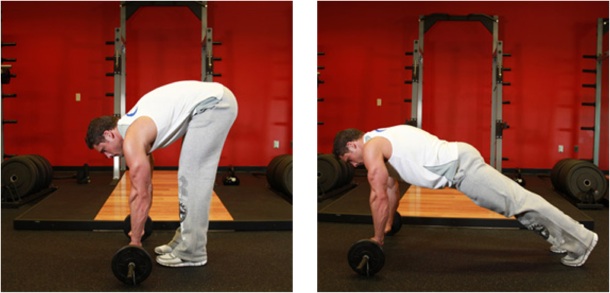
If you want a strong mid section, the barbell rollout is one of the best exercises you can do. While more conventional exercises, like sit ups and leg raises, are popular as well, they involve the hip flexors too much. This takes the focus off of your abs (the rectus abdominis). The barbell rollout, instead, works mainly the rectus abdominis. The isometric, static contraction during the rollout thoroughly strengthens the core abdominal muscles.
Cable Chest Press
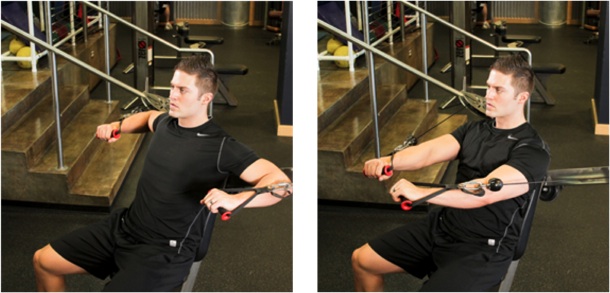
You may wonder why experts regard the cable chest press as a fast chest building exercise. Isn’t the barbell bench press the king of chest exercises? Well, no. The bench press fails to effectively add meat to your chest muscles because it does not challenge horizontal adduction. It surely stimulates growth in the upper body, but unlike cables, the barbell has a mechanical disadvantage when it comes to fully engaging the chest muscles. In the cable chest press, the exercise movement follows the natural circular path determined by the pectoral’s function and it is therefore more effective than the highly esteemed barbell press.
Barbell Shrug
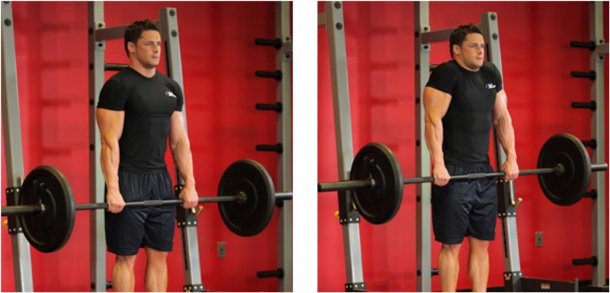
A traditional upper body exercise for most body builders, the barbell shrug targets the trapezius. The movement is short, but the result is big. A large trapezius makes a big difference in your appearance. Muscles in the middle and lower back (romboid, erector spinae) and abdomen (obliques, rectus abdominis) are also involved to a lesser extend. To avoid injury, do not rotate your shoulders while shrugging.
Dumbbell Bench Press
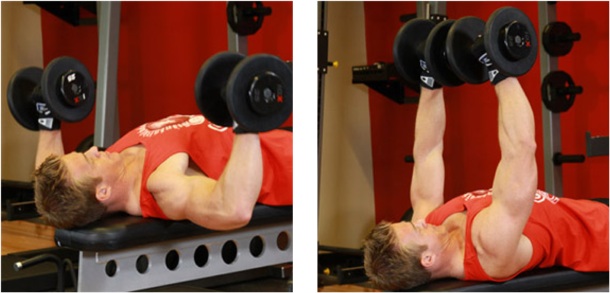
The bench press is one of the best exercises for the upper body. On the downside, it poses injury risk because it overstresses the shoulder. In addition, the press move involves the triceps and shoulders so the pecs are not hit directly. Still, it is a compound movement that when performed properly can greatly stimulate muscle growth. Using dumbbells is better than using a barbell because dumbbells offer freedom of motion that can accommodate rotator cuff’s particular mechanical requirements. Doing dumbbell presses on the floor instead of on a bench ensures that at the lower part of the motion your elbows do not move below your shoulders, which would overstress the rotator cuffs and deltoids.
Pec Deck Flies
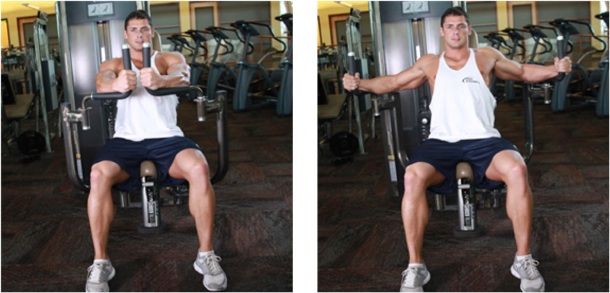
Including chest flies in a list of Fast Muscle Building Exercises flies on the face of conventional knowledge. Chest flies target the muscles of the chest. But so do other more compound exercises (i.e barbell bench press). Why choose chest flies? It’s believed that chest flies, like other squeezing movements (i.e cable crossovers) can stimulate chest growth more effectively than traditional press movements because they exert resistance that is directly opposite to the natural pec function, which is to pull the upper arm across the body right above the midline (adduction). Presses, on the other hand, are more of a front delt and triceps exercise and as a result fail to fully engage the pectoral muscles. In support of this argument, there are bodybuilders who attribute their huge pecs to squeezing movements, like the chest flies, rather than pressing movements. The muscle growth I experienced after using chest flies as my main chest exercise for the last 3 months, is higher than the growth I saw after 5 years of bench pressing. Impressive.
Bicycle Crunches
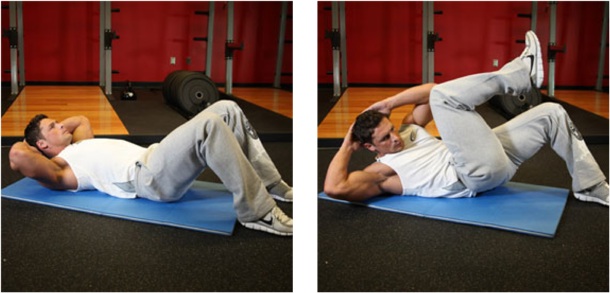
According to a study by San Diego State University, among the most common abdominal exercises, bicycle crunches are the best ab exercise you can do, in terms of muscle activation. Crunches are effective, safe, and free. Don’t let the TV ads convince you to buy any bulky contraption that will take up room in your closet. Of course, crunches alone will not make your abs ripped. Proper diet along with resistance training and aerobic exercise are more important than ab exercises in sculpting the sought after 6-pack.
Seated Cable Pulley Rows
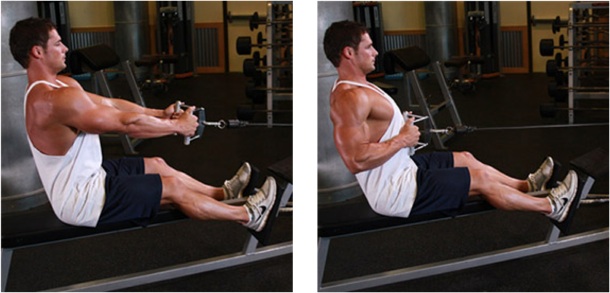
For a thick and wide back, you need to do cable rows. This exercise hits the upper back (trapezius), and the middle back (latissimus dorsii) giving the upper body that V shape. The biceps and forearms are strengthened, too. Seated rows develop the lower back (spinal erectors) as well, because this part of the body is in constant tension during the movement.
Barbell Bench Press
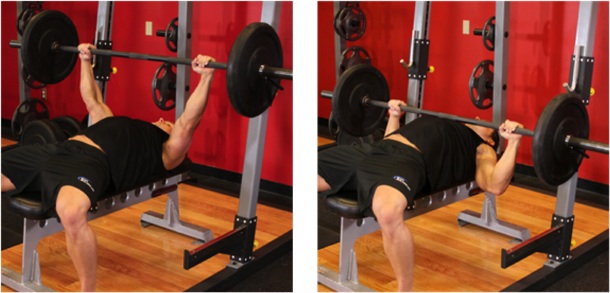
The bench press is a great muscle builder, which is mistakenly called “the King of chest exercises”. For many, it is the index of one’s total body strength. While it does activate big muscles in the upper body including the triceps, shoulders and chest muscles, it is by no means the most effective exercise for chest development, contrary to what most people have been told. First, it does not fully contract the pectoral muscles because your hands are still far apart at the point of full flexion. In fact, the barbell bench press misses the contraction almost entirely. There are other exercises, such as the cable crossover or the butterfly machine (chest flies) that fully contract the pectoral muscles because they bring both hands to the middle of the body. Secondly, the bench press stretches the shoulder muscle so excessively that it can damage shoulder cartilage. Still, the barbell press, if performed properly, it is a great muscle builder because it involves the largest muscles of the upper body. But don’t expect it to do on your chest the work that will do on your triceps and delts. To avoid injury, do not bring the bar to the point it touches your chest. Stop when your arms are parallel to the ground.