25 Largest Animals On Earth: A Definitive Guide to Earth’s Biggest Creatures

From the crushing depths of the Pacific Ocean to the sun-scorched savannas of Africa, our planet is home to creatures of mind-bending scale. Some weigh more than a dozen school buses. Others stretch longer than a basketball court. A few are so massive they have no natural predators — their size alone is their armor.

This definitive list of the 25 largest animals on Earth covers the full spectrum of animal life: mammals, birds, reptiles, fish, amphibians, and invertebrates. Before we dive in, it’s worth clarifying what “largest” means. Depending on the animal, we measure size by mass (weight), length, or height — and sometimes all three. A blue whale is the heavyweight champion by mass, but a lion’s mane jellyfish beats everything on raw length. We’ll note which metric applies where it matters most.

Whether you’re a lifelong wildlife enthusiast or just stumbled into a deep curiosity about Earth’s giants, this guide delivers consistent, comparable data for each animal — weight, length or height, habitat, and a fact that’ll genuinely surprise you.

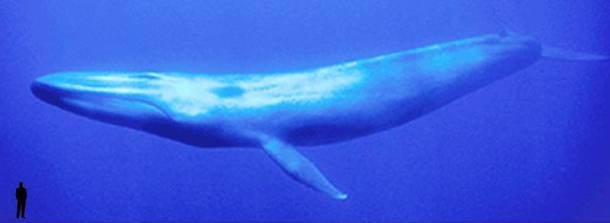
1. Blue Whale (Balaenoptera musculus) — The Largest Animal Ever

No other creature on Earth — living or extinct — rivals the blue whale in sheer mass. Adults reach up to 30 meters (98 ft) in length and weigh as much as 190 metric tons (209 short tons). Their hearts alone weigh roughly 180 kg (400 lb) and beat so slowly you could count the pulses.

Blue whales live in every ocean on Earth and feed almost exclusively on krill, consuming up to 4 metric tons of the tiny crustaceans per day. Despite their colossal size, they’re filter feeders — gentle giants with no interest in anything larger than a thumb.

The 25 Largest Animals on Earth

Marine Mammals

2. Fin Whale (Balaenoptera physalus)

The second largest animal on Earth, fin whales reach up to 27 meters (88 ft) and weigh around 74 metric tons. They’re nicknamed the “greyhounds of the sea” for their surprising speed — capable of bursts up to 47 km/h (29 mph). Like the blue whale, they’re baleen feeders that consume vast quantities of small fish and crustaceans.

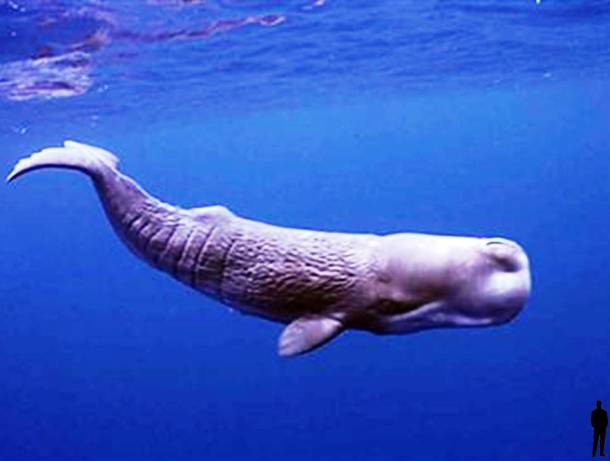
3. Sperm Whale (Physeter macrocephalus)

The largest toothed predator alive, sperm whales grow to 20.5 meters (67 ft) and weigh up to 57 metric tons. They dive deeper than almost any other air-breathing animal — routinely reaching 1,000 meters (3,280 ft) and occasionally exceeding 2,000 meters — hunting giant squid in pitch-black water. Their enormous heads contain spermaceti, a waxy oil once prized by whalers.

4. Southern Elephant Seal (Mirounga leonina)

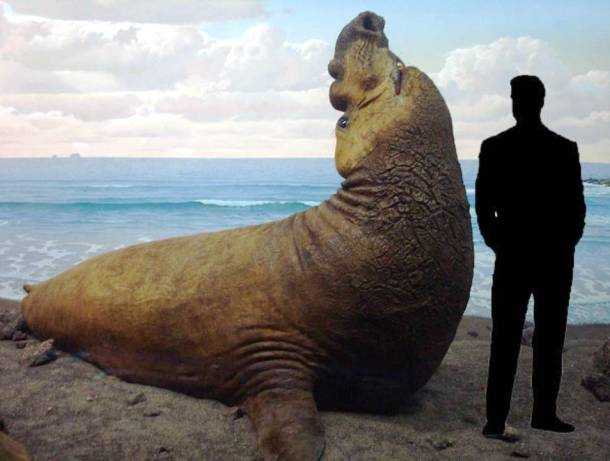
The largest carnivore by mass on the planet, the male southern elephant seal grows to 6 meters (20 ft) and weighs up to 4 metric tons (4.4 short tons). Females are dramatically smaller — a rare example of extreme sexual dimorphism. These seals are built for deep diving and can hold their breath for up to two hours while hunting squid and fish.

Land Mammals

5. African Bush Elephant (Loxodonta africana)

The undisputed king of the land, the African bush elephant reaches 6–7.5 meters (20–25 ft) in body length, stands 3.3 meters (10.8 ft) at the shoulder, and weighs up to 6 metric tons (6.6 short tons). Elephants are ecosystem engineers — their feeding habits, water-hole digging, and seed dispersal shape entire landscapes across sub-Saharan Africa.

6. White Rhinoceros (Ceratotherium simum)

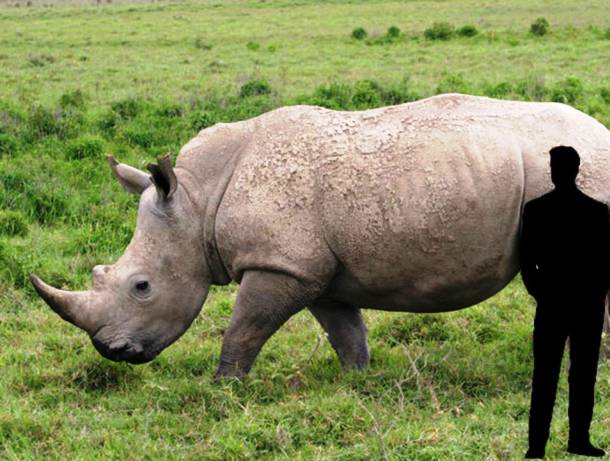
The second heaviest land animal, white rhinos measure up to 4.2 meters (13.8 ft) in length and weigh as much as 3.6 metric tons (4 short tons). Despite their name — likely a mistranslation of the Afrikaans word wyd (wide), referring to their broad mouth — they’re actually grey. Two subspecies exist: the southern white rhino (conservation success story) and the northern white rhino (functionally extinct, with only two females remaining).

7. Asian Elephant (Elephas maximus)

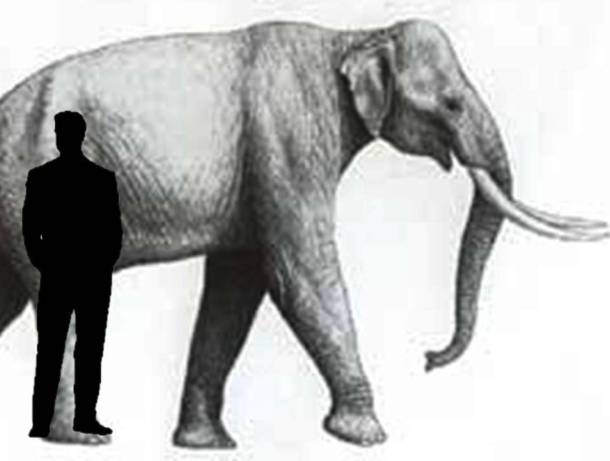
Slightly smaller than its African cousin, the Asian elephant still commands respect at up to 5.5 meters (18 ft) long and 5 metric tons in weight. Found across South and Southeast Asia, they’ve had a closer relationship with humans over millennia — used in logging, ceremonies, and warfare. Their smaller ears and more rounded back distinguish them from African elephants.

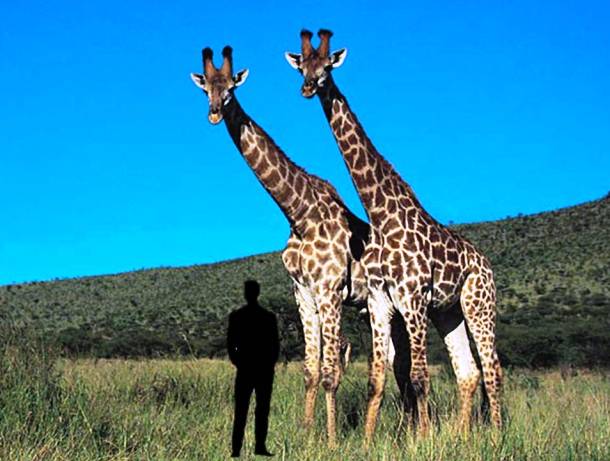
8. Giraffe (Giraffa camelopardalis)

The tallest living animal on Earth, giraffes stand up to 5.7 meters (18.7 ft) tall and weigh around 1.9 metric tons. Their necks alone can reach 1.8 meters (6 ft), requiring a uniquely powerful cardiovascular system — their hearts generate roughly double the blood pressure of most mammals just to pump blood up to their brains.

9. Polar Bear (Ursus maritimus)

The largest land carnivore in terms of length, male polar bears grow to 3 meters (10 ft) and weigh up to 600 kg (1,300 lb). They live across the Arctic Circle and depend almost entirely on sea ice for hunting ringed and bearded seals. Climate change is shrinking their habitat at an alarming rate — polar bears are now classified as vulnerable by the IUCN.

10. Kodiak Bear (Ursus arctos middendorffi)

Found exclusively on Alaska’s Kodiak Archipelago, the Kodiak bear is the largest subspecies of brown bear and rivals the polar bear in size, with some males reaching 680 kg (1,500 lb). Isolated on the island for roughly 12,000 years, they’ve evolved into giants thanks to a protein-rich diet of salmon, berries, and sedge grass.

Birds

11. Common Ostrich (Struthio camelus)

The largest and heaviest living bird, the common ostrich stands up to 2.8 meters (9.2 ft) tall and weighs as much as 156 kg (344 lb). It lays the largest eggs of any living bird and runs faster than any other bird — reaching speeds of 70 km/h (43 mph). Its wings are useless for flight but excellent for balance and mating displays.

12. Somali Ostrich (Struthio molybdophanes)

Once considered the same species as the common ostrich, the Somali ostrich was reclassified as its own species in 2014. Found in the Horn of Africa, males display striking blue-grey necks and legs. They match the common ostrich in size, making them co-holders of the title of largest living bird.

13. Emperor Penguin (Aptenodytes forsteri)

The tallest and heaviest penguin species, emperor penguins reach 1.2 meters (4 ft) tall and weigh up to 45 kg (99 lb). They breed in the harshest conditions on Earth — Antarctica in winter, at temperatures as low as -60°C (-76°F). Males incubate eggs on their feet for two months without eating, huddling together to survive the brutal polar storms.

14. Andean Condor (Vultur gryphus)

With a wingspan reaching 3.3 meters (10 ft 10 in), the Andean condor is one of the largest flying birds on Earth by wingspan and body size combined. Weighing up to 15 kg (33 lb), these birds soar over the Andes Mountains using thermal air currents, sometimes covering 200 km (124 miles) in a single day without flapping their wings.

Reptiles

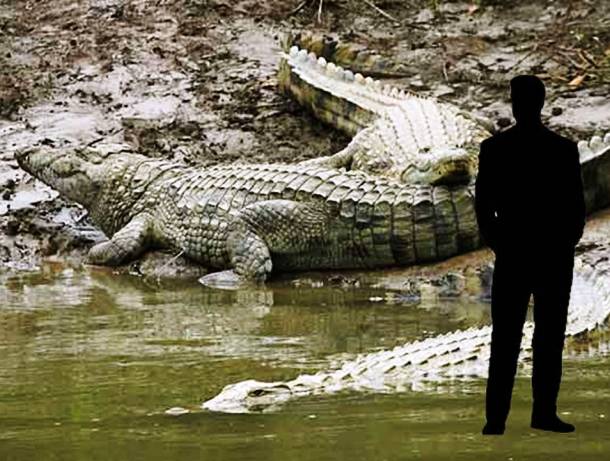
15. Saltwater Crocodile (Crocodylus porosus)

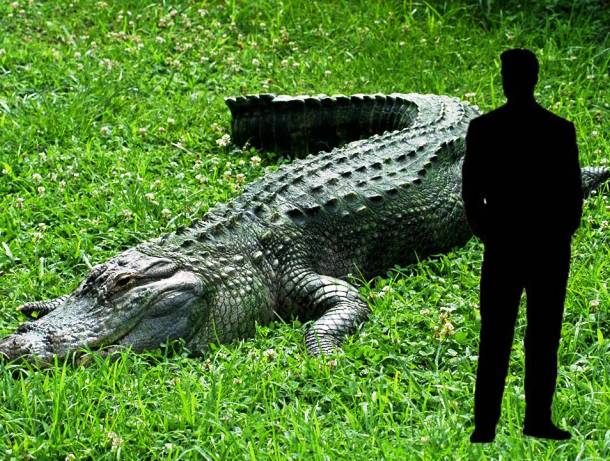
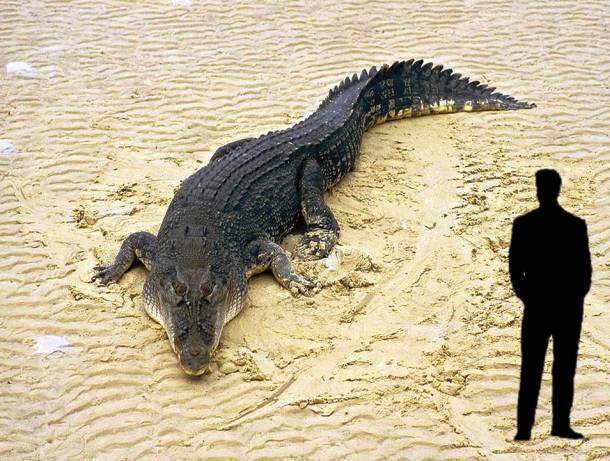
The largest living reptile, male saltwater crocodiles grow to 6.3 meters (21 ft) and weigh over 1 metric ton (2,200 lb). Found from India’s eastern coast to northern Australia, they’re opportunistic apex predators capable of taking down water buffalo, sharks, and — occasionally — humans. They’re also exceptional swimmers, crossing vast stretches of open ocean between islands.

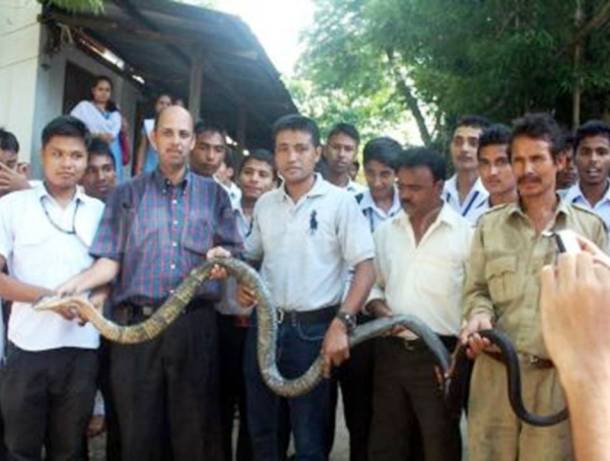
16. Reticulated Python (Malayopython reticulatus)

The longest snake on Earth, reticulated pythons reach up to 6.25 meters (20.5 ft), with unverified reports of specimens exceeding 7 meters. Found across Southeast Asia, they’re constrictors that kill prey by squeezing rather than venom. Their complex geometric pattern of scales — which gives them their name — is one of the most distinctive in the animal kingdom.

17. Green Anaconda (Eunectes murinus)

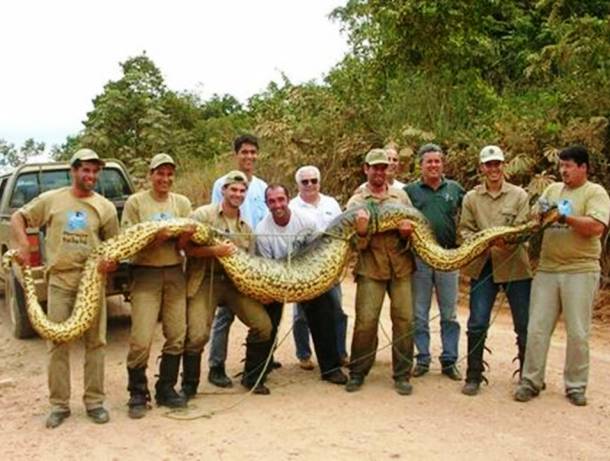
The heaviest snake alive, the green anaconda weighs up to 97.5 kg (215 lb) and stretches to 5.2 meters (17 ft). Native to the Amazon Basin, they’re semi-aquatic ambush predators, lurking in slow-moving rivers and marshes to hunt capybara, deer, and even caimans. Their bulk makes them slow on land — but effortlessly powerful in water.

18. Komodo Dragon (Varanus komodoensis)

The largest living lizard, Komodo dragons grow to 3 meters (9.8 ft) and weigh up to 90 kg (200 lb). Native to a handful of Indonesian islands, including Komodo, Rinca, and Flores, they hunt deer, pigs, and water buffalo using a combination of physical power and venom — a discovery only confirmed by scientists in 2009, overturning decades of “bacteria-mouth” mythology.

19. Leatherback Sea Turtle (Dermochelys coriacea)

The largest sea turtle and the largest living turtle overall, leatherbacks reach 2.2 meters (7.2 ft) in length and weigh up to 900 kg (2,000 lb). Unlike other sea turtles, they lack a hard shell — their backs are covered in tough, rubbery skin reinforced with tiny bone fragments. They migrate thousands of kilometers annually and dive deeper than any other turtle, reaching 1,280 meters (4,200 ft).

Fish

20. Whale Shark (Rhincodon typus)

The largest fish on Earth, whale sharks grow to an astonishing 18 meters (59 ft) and weigh up to 21.5 metric tons (23.7 short tons). Despite their intimidating size, they’re filter feeders — their wide mouths scoop up plankton, small fish, and fish eggs. They’re found in tropical and warm temperate oceans worldwide and are listed as endangered on the IUCN Red List.

21. Ocean Sunfish (Mola mola)

The heaviest bony fish in the world, the ocean sunfish reaches 3.3 meters (10.8 ft) in length and weighs up to 2.3 metric tons (2.5 short tons). Their bizarre, disc-shaped bodies look like a swimming head. They feed primarily on jellyfish and spend much of their time near the surface basking in the sun — a behavior scientists believe helps them warm up after deep dives.

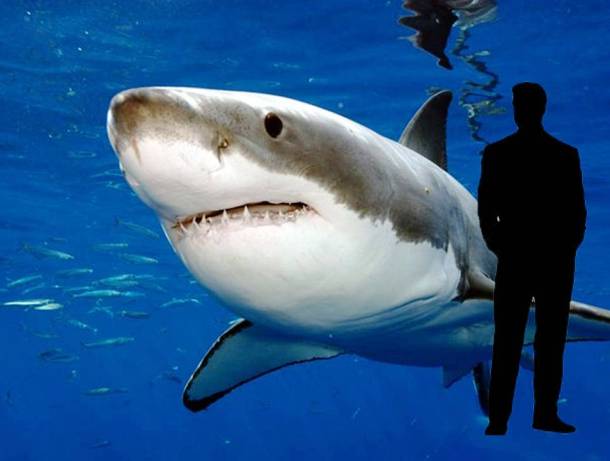
22. Great White Shark (Carcharodon carcharias)

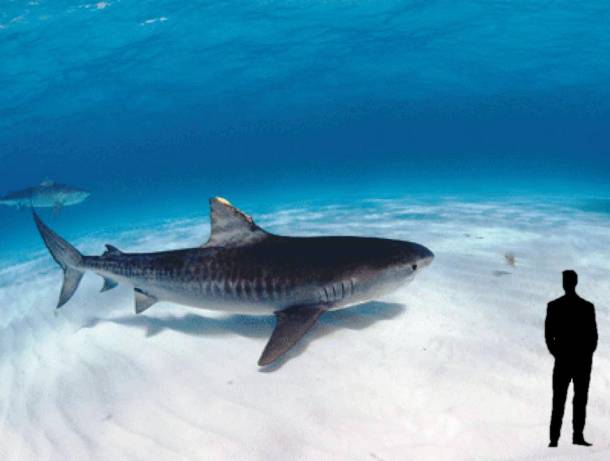
One of the largest predatory fish alive, great white sharks reach 6.1 meters (20 ft) and weigh up to 2 metric tons (2.2 short tons). They’re apex predators found in every major ocean, known for their role at the top of the marine food chain. Contrary to popular culture, they rarely target humans — most bites are investigatory rather than predatory.

Amphibians

23. Chinese Giant Salamander (Andrias davidianus)

The world’s largest amphibian, the Chinese giant salamander grows to 1.8 meters (5.9 ft) in length and weighs up to 65 kg (143 lb). Found in rocky mountain streams and lakes in China, it’s almost entirely nocturnal and hunts fish, frogs, and crustaceans. Critically endangered due to overharvesting for food and traditional medicine, wild populations have collapsed by more than 80% in recent decades.

Invertebrates

24. Colossal Squid (Mesonychoteuthis hamiltoni)

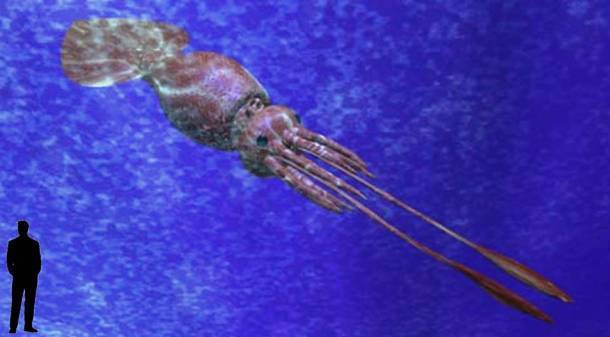
The largest invertebrate by mass, the colossal squid reaches up to 14 meters (46 ft) in total length and weighs up to 750 kg (1,650 lb). Living in the deep waters around Antarctica, it’s rarely observed alive — most of what scientists know comes from specimens found in sperm whale stomachs. Its eyes are the largest of any animal on Earth, measuring up to 27 cm (10.6 in) across.

25. Lion’s Mane Jellyfish (Cyanea capillata)

The longest animal on Earth by total length, the lion’s mane jellyfish extends its tentacles to an extraordinary 36.6 meters (120 ft) — longer than a blue whale. Found in the cold waters of the North Atlantic and North Pacific, its bell can reach 2.1 meters (7 ft) in diameter. Despite its alien appearance, it’s still an invertebrate with no brain, no heart, and no bones — just 95% water and an impressive set of stinging tentacles.

Why Size Matters: The Ecological Role of Earth’s Giants

Large animals aren’t just record-holders — they’re ecological pillars. Blue whales, through their feeding and defecation cycles, recycle nutrients across ocean basins in what scientists call the “whale pump,” fertilizing phytoplankton that produce roughly half of Earth’s oxygen. Elephants create water holes used by dozens of other species. Apex predators like great white sharks keep prey populations in check, preventing overgrazing of underwater vegetation.

When giants disappear, entire ecosystems can unravel. Many of the animals on this list face serious conservation challenges: habitat destruction, poaching, climate change, and commercial fishing all take their toll. The blue whale population, once devastated by commercial whaling, has slowly recovered since the 1986 International Whaling Commission moratorium — but still sits at roughly 10,000–25,000 individuals, a fraction of historical numbers.

Understanding and appreciating these animals is the first step toward protecting them.

FAQ

What is the largest animal ever to have lived on Earth?
The blue whale (Balaenoptera musculus) holds this title — not just the largest animal alive today, but the largest known to have ever existed. At up to 190 metric tons and 30 meters in length, it surpasses even the largest dinosaurs in mass.

What is the largest land animal on Earth?
The African bush elephant (Loxodonta africana) is the largest living land animal, weighing up to 6 metric tons and standing 3.3 meters (10.8 ft) at the shoulder.

What is the largest invertebrate in the world?
The colossal squid (Mesonychoteuthis hamiltoni) is the largest invertebrate by mass, weighing up to 750 kg (1,650 lb). The lion’s mane jellyfish exceeds it in total length when tentacles are included.

What is the longest animal on Earth?
The lion’s mane jellyfish (Cyanea capillata) holds the record for total length, with tentacles extending up to 36.6 meters (120 ft) — longer than a blue whale’s body.

What is the largest living bird?
The common ostrich (Struthio camelus) is both the tallest and heaviest living bird, reaching 2.8 meters (9.2 ft) tall and weighing up to 156 kg (344 lb).

What is the largest living reptile?
The saltwater crocodile (Crocodylus porosus) is the world’s largest living reptile, with males growing up to 6.3 meters (21 ft) and exceeding 1 metric ton in weight.

The Takeaway

Earth’s 25 largest animals span every major habitat — from frozen Arctic tundra to the deepest ocean trenches — and every major animal group. The blue whale reigns supreme in mass, the lion’s mane jellyfish wins on length, and the African bush elephant dominates on land. Together, these giants represent billions of years of evolution optimized for scale.

Platforms like List25 have long celebrated the extraordinary variety of life on our planet, and few topics capture that diversity better than the sheer scale of the world’s largest creatures. If this list has done one thing, it’s hopefully turned abstract statistics — 190 metric tons, 36-meter tentacles — into genuine appreciation for the animals still sharing this planet with us.

Many of them won’t survive another century without meaningful conservation efforts. Knowing their names and understanding their lives is a small but important start.

Categorized in:

List25,

Last Update: July 18, 2026